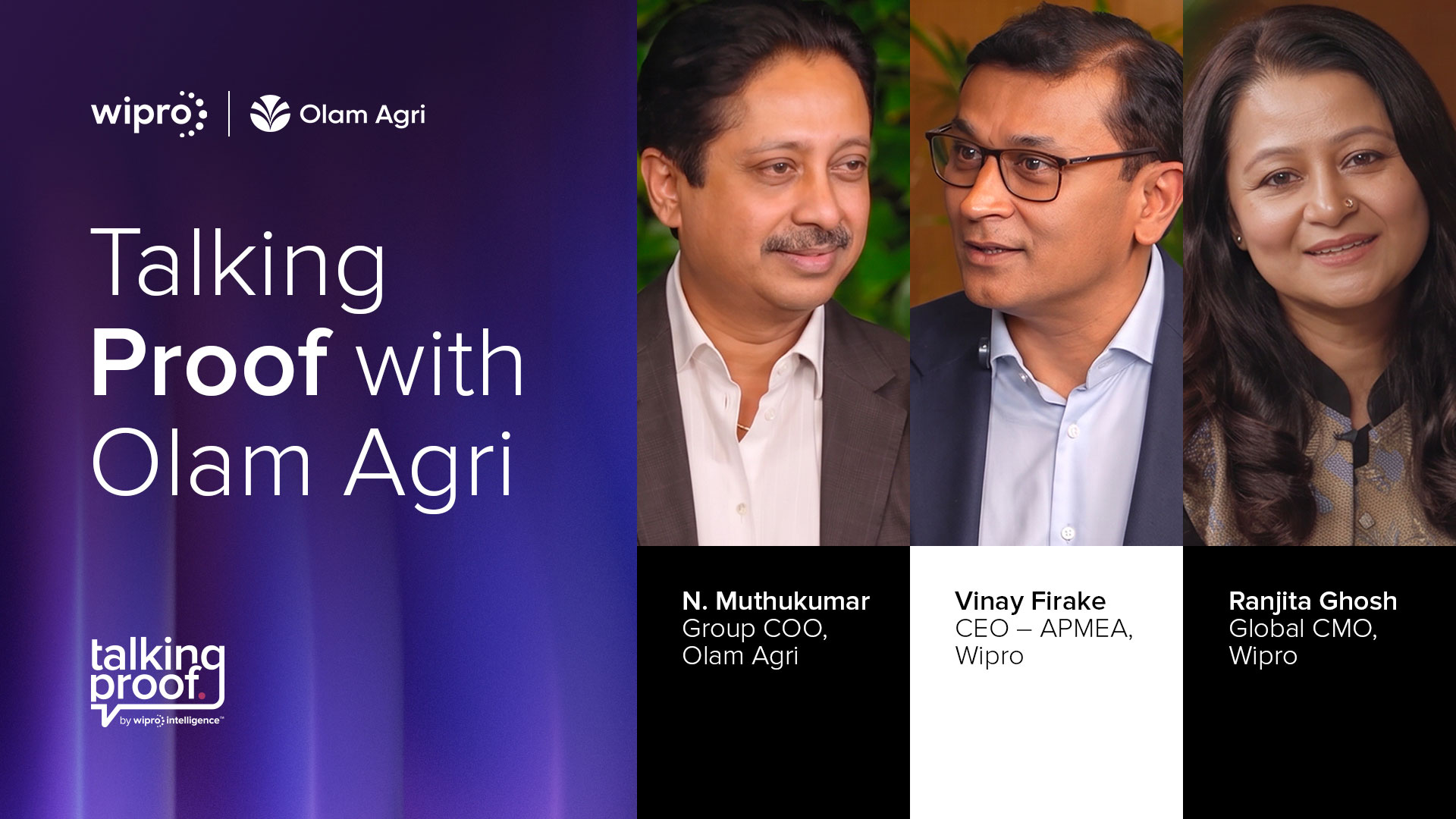
Living essentials, and the systems behind them
Muthu described Olam Agri as a living essentials company. Its businesses span food staples such as wheat, rice, palm, corn and soybean, cotton for clothing, wood for shelter, and rubber for mobility.
“Collectively, Olam Agri is known as a living essentials company,” he said.
That phrase stayed with me. It moves the conversation beyond commodities and markets to the basic human needs they serve. It also makes the question of resilience immediate and human. When these systems are disrupted, the impact is not abstract. It reaches households, communities and economies.
Predictable demand, increasingly uncertain supply
Muthu explained that running a global Food and Agri business is far more complex today than it was before COVID. Demand for food and agricultural raw materials is relatively predictable. Supply is not.
Government and policy interventions, climate change, geopolitical upheaval and macroeconomic pressures can all affect the movement and availability of food. These are what Muthu called “uncontrollable variables”. Inevitably, some remain unresolved and create “decision gaps”.
His point about natural resources was equally important. Water is finite, which makes the ability to produce “more crop per drop” a practical imperative. He also called attention to biodiversity collapse and its consequences for the global food security agenda.
The response, in Olam Agri’s experience, is to build resilience through geographic and portfolio diversification. That is not resilience as a reaction. It is resilience designed into the business before the shock arrives.
Technology must help close the decision gap
This is where the role of technology becomes pervasive, but also very specific. Vinay noted that Food and Agri enterprises increasingly need to make decisions not in months, quarters or days, but in hours.
That speed depends first on the fundamentals. Many businesses still contend with siloed systems, technical debt and fragmented data across the value chain. Without an end-to-end view, from sourcing and supply through to the market, it is difficult to sense change early or respond with confidence.
Once that foundation is in place, AI can support decision-making and augment the people who understand the work, including traders and operational teams. The objective is not technology for its own sake. It is better judgement, informed by connected data, delivered at the speed the situation demands.
There is also no universal model. A global platform must generate consistent insight while respecting differences in regulation, language, culture and market context. Knowing what should be standardised and what must remain local is part of the resilience equation.
From globalization to sovereignty
Our conversation also explored the growing importance of sovereignty. Muthu observed that, while energy security has long been a national priority, food security has become much more prominent over the past decade. Countries are taking concrete action as they recognise that local agroclimatic conditions may not allow them to grow everything they consume.
Vinay drew a parallel with technology. Investment in sovereign cloud, sovereign data and sovereign AI is rising, bringing a corresponding need to operate within local regulations and data protection requirements.
These forces will shape the food and agriculture enterprise of the future. Muthu expects changes in how food is grown, traded and financed. Vinay highlighted the potential for AI, quantum and space technologies to help address difficult problems, from supply chain choke points and transportation to weather prediction and crop-yield analysis. The relevant test will be whether these technologies improve decisions and outcomes in the real world.
Proof is what holds under pressure
At the end of the conversation, my perspective was that resilience must be designed before disruption arrives. Resilience is built through choices made when there is still time to choose: diversifying supply, connecting data, strengthening visibility, respecting local context and preparing people to act. When disruption comes, those earlier decisions become visible. They either hold, or they do not.
This conversation brought the idea of proof into sharp focus. Proof is not a projection of what technology may someday do. It is found in how an enterprise senses change, makes decisions, adapts its operations and continues to serve the needs people rely on.
In Food and Agri, the purpose of technology is especially tangible. It must strengthen the systems people depend on every day, helping enterprises anticipate change, make better decisions and continue delivering life’s essentials when conditions become unpredictable.
Muthu brought the reality of those systems into the room. Vinay connected that reality to the decisions technology can enable. What stayed with me was the responsibility behind both perspectives. Feeding the world is not one challenge with one answer. It is a continuous test of resilience, and proof is what holds when the system is under pressure.