


Over the past decade, enterprises have migrated large volumes of software to the cloud. Yet many organisations find themselves no more agile than before. Applications are running on modern infrastructure, but they behave like the legacy systems they replaced: slow to change, risky to modify, and expensive to operate.

This isn’t a cloud problem; it’s a modernization problem. We see it repeatedly: complex, mission-critical applications with millions of lines of code, deeply embedded business logic, and years of accumulated dependencies. These systems may now run on EC2, some even on Kubernetes or managed platforms. However, migration alone hasn’t addressed the underlying architecture. The result is a familiar outcome: a monolith in the cloud that still holds teams back.

The Megalith Problem

Most enterprises no longer run simple monoliths. They run what we call megaliths—vast, interconnected systems built through years of growth, acquisitions, regulatory change, and well-intentioned shortcuts. Business logic sprawls across hundreds of modules. Critical workflows cross teams and technologies. No single person fully understands how changes ripple through the system. 

Traditional modernization approaches struggle here. Lift-and-shift avoids the hardest questions. Static code analysis misses runtime behaviour. Manual refactoring doesn’t scale to enterprise complexity, and full rewrites are rarely feasible for systems that keep the business running. Faced with these realities, many organisations stop after migration; not because modernization is complete, but because the remaining work feels too risky and too opaque to navigate with confidence.

Why Modernization Stalls 

The real blocker isn’t tools or talent. It’s a lack of architectural clarity. 

Most teams are asked to modernize systems they cannot actually see or understand. Documentation is outdated. Architecture diagrams reflect intent, not reality. The true structure of the system—how code behaves in production, where dependencies really exist, and which paths are critical—is difficult to comprehend. Without that visibility, modernization becomes guesswork. AI may accelerate code changes, but without architectural context, it can also accelerate the accumulation of technical debt. Refactoring decisions are made in isolation. Service decomposition turns into trial and error. Risk increases precisely when teams are trying to move faster. Architectural modernization fails when it is based on static documentation rather than an understanding of a living system. 
Our Point of View

At Wipro and vFunction, successful modernization starts with the architecture. Before refactoring, before decomposition, before introducing AI at scale, teams need to understand how their systems actually work.

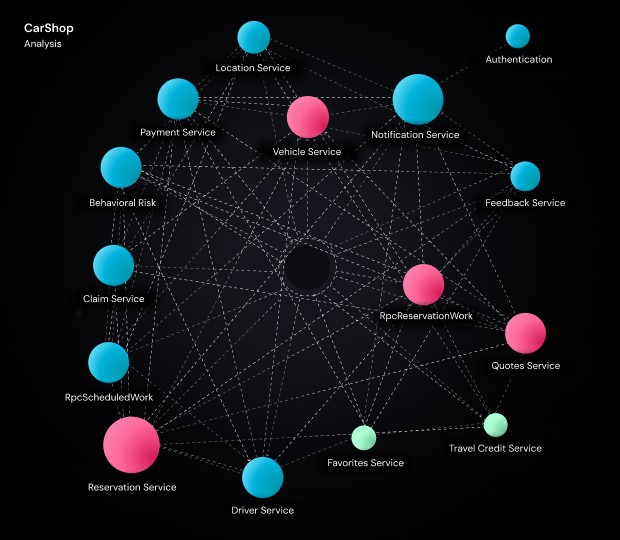
Architectural visibility: surfacing real service boundaries and dependency clusters to guide high-impact refactoring decisions

That means combining static analysis, runtime data, and data science to reveal real dependencies, domain boundaries, and technical debt. This architectural intelligence allows teams to prioritize changes based on business value and risk, rather than intuition.

From Insight to Execution 

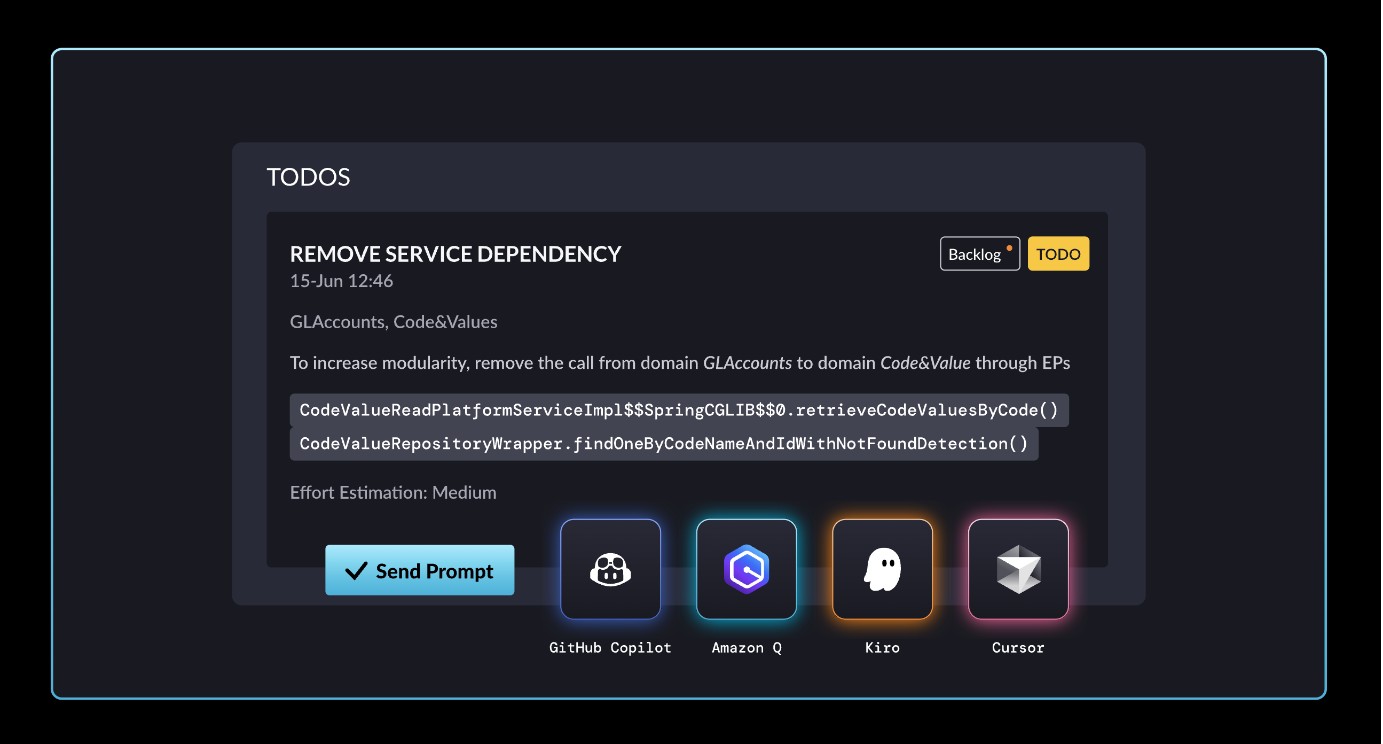
vFunction provides the architectural intelligence layer that makes modernization actionable. By analyzing Java and .NET monoliths using static code analysis, runtime behavior, and advanced data science, vFunction surfaces the architectural technical debt that slows teams down: hidden dependencies, tightly coupled services, and unclear domain boundaries. This intelligence powers a high-confidence, actionable modernization plan that guides AI code assistants in automated, precise refactoring at scale.

GenAI code assistants receive precise architectural context for safe, automated refactoring

Wipro brings deep industry expertise and the ability to operationalize these insights across large transformation programs. With proven delivery frameworks and global reach, Wipro ensures architectural decisions align with business priorities, regulatory requirements, and execution realities. Together, we move modernization from manual, high-risk processes to automated, evidence-based ones.

What This Looks Like in Practice 

Technical debt can account for 10%, 50%, or even up to 90% of a technology estate in extreme cases — creating a major barrier to innovation and scalability. vFunction and Wipro address this challenge by targeting architectural technical debt, the most difficult technical debt to resolve.  

Organizations adopting this approach gain immediate visibility into systems. Teams can identify which parts of the architecture are blocking change, which services should be extracted first, and where refactoring will deliver the greatest impact with the least disruption. By applying AI-driven architectural modernization and integrated expert services, teams can accelerate modernization by at least 15X compared with traditional methods.

A compelling example of this approach is Correla, one of the largest UK-based product development and managed service provider in the energy market. In Correla’s case, vFunction and Wipro worked together to modernize a mission-critical energy platform with millions of lines of code without interrupting operations. By combining architectural analysis with guided refactoring, the organization increased engineering velocity, strengthened resilience, and reduced long-standing technical debt without resorting to risky rewrites.

We see similar outcomes across regulated industries, where modernization must move quickly but cannot afford failure.

Modernization Is a Discipline, Not a Project 

Modernization is no longer a one-time initiative. As cloud platforms, AI, and digital ecosystems evolve, architectures must evolve continuously. This requires continuous architectural visibility, domain-driven design principles, and AI-assisted execution embedded into everyday engineering work. Organizations that treat modernization as an ongoing discipline, not a deadline, are the ones building systems that can adapt, scale, and endure. The cloud changed where software runs. AI is changing how software is built. But architecture determines whether delivers lasting value. 

About the Authors

Sorabh Singhal
SVP & Global Head – Industry Cloud & Digital, Wipro

Sorabh is a seasoned consulting leader with over 25 years of experience in technology and digital transformation. As Senior Vice President and Global Head of Industry Cloud and Digital at Wipro, he oversees a P&L of more than $2 billion and leads a global team of 35,000+ professionals delivering software engineering, cloud modernization, and vertical industry solutions. He is also the business owner of WEGA, Wipro’s agentic platform, where he drives the vision and adoption of AI-powered engineering and transformation capabilities across the organization. He is known for translating complex transformation goals into pragmatic strategies and driving innovation across enterprise agility, engineering excellence, and AI enablement. Sorabh’s leadership blends strategic vision with hands-on execution, helping global organizations navigate change and accelerate outcomes with clarity and confidence. Sorabh brings a grounded, outcome-driven approach to every engagement. He has led large-scale transformation programs, shaped multi-million- dollar deals, and built high-performing teams that deliver with purpose. His thoughtful leadership and deep commitment to execution inspire excellence and create an environment where people thrive.

Moti Rafalin
CEO & Co-Founder, vFunction

Moti Rafalin co-founded vFunction and serves as its CEO. He brings over 20 years of experience in the enterprise software market to his role, with a focus on infrastructure, applications, and security. Prior to co-founding vFunction, Moti co-founded and led WatchDox from inception until its acquisition by BlackBerry, growing the company over 20 consecutive quarters and establishing it as a leader in the secure enterprise mobility and collaboration space. Subsequently, he served as Senior Vice President at BlackBerry LTD. Before WatchDox he was a general manager of the application management business at EMC. He holds an engineering degree from Technion and an MBA from the Harvard Business School.