



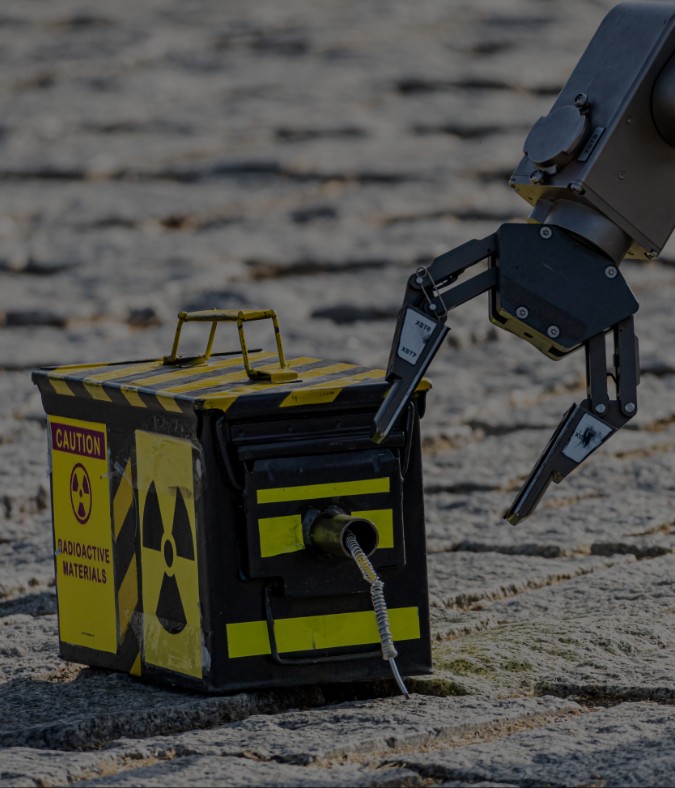

A growing inspection backlog meets a shrinking pool of qualified inspectors — and many of the assets that need attention sit where people shouldn't go: explosive atmospheres, confined spaces, energized lines, high-temperature units, remote installations. Inspecting them is costly in safety, time, and money; skipping them is worse, risking unplanned outages, regulatory exposure, and catastrophic failure. Traditional inspection robots or programmes can't close that gap.
Why Autonomous Inspection for Hazardous Assets Matters
Robotic platforms — quadrupeds, crawlers, drones, and submersibles — can routinely enter environments where humans cannot or should not. Combined with multi-modal sensing and Physical AI behaviors, they perform the inspection autonomously, route findings to the right enterprise system, and flag anomalies for human follow-up.
The Autonomous Inspection Advantage:
- Safer: Routine exposure shifts from people to platforms certified for the conditions — ATEX/IECEx-rated where required.
- More frequent: Inspections that were quarterly on cost and risk grounds become weekly or daily, catching issues before they become incidents.
- Higher data quality: Every pass yields a consistent, geo-tagged, machine-readable record — fuel for risk-based inspection and predictive-maintenance models.
How Wipro Delivers It
Wipro pairs a platform chosen for the specific hazard with multi-modal sensing (visible, thermal, acoustic, gas, hyperspectral), perception models tuned to the asset class, and a mission planner. Routes are rehearsed in the Bidirectional Digital Twin; findings flow straight into CMMS, ERP / SAP PM, and the process historian; and the approach maps to risk-based inspection (API RP 580 / 581) and functional safety (IEC 61508 / 61511).
Offerings drawn on: HMR Orchestration · Bidirectional Digital Twin · Sim2Real · RoboOps