Contracting Has Become a CEO/CFO Problem

Payer–provider negotiations used to be an annual procurement exercise: rates, terms, and incremental adjustments. That era is over. Today, contracting failures are triggering network instability, margin shocks, employer dissatisfaction, and—increasingly—regulatory intervention. For senior leaders, this is no longer “contracting.” It is economic strategy.

The central shift is simple: the payer–provider contract is becoming the operating system for affordability and access in a volatile market. When drug trend, utilization, labor constraints, and regulation move faster than annual deal cycles, a rate-card negotiation cannot keep the system stable. Leaders need a new model: co-managed economics, supported by shared data, disciplined governance, and continuous performance management.

The Healthcare Contracting Crisis Is Structural, Not Tactical

What looks like “hard bargaining” is actually a breakdown in the underlying economic model. The gap between healthcare costs and reimbursement is widening in ways that unit-price changes can’t fix. Both payers and providers are negotiating from positions of constraint—making conflicts more frequent, more public, and more disruptive to employers and patients.

This is why the crisis feels existential: the system is being asked to absorb shocks that the traditional contract structure was never designed to handle. The path forward is not “better negotiation.” It is a pivot from adversarial contracting to shared-economics design—a model built to manage volatility, align incentives, and protect access.

The Root Problem: An Economic Model That Can’t Absorb Volatility

The widening gap between healthcare costs and reimbursement has moved beyond negotiation friction, it reflects a fundamental structural failure. Both payers and providers are operating within an outdated economic model that cannot support today’s volatility, rising utilization, or escalating cost pressures. These stresses are visible across every dimension of the market.

1. Financial Fragility is now bilateral

  • Payers are facing steep increases in specialty drug spend, unpredictable pharmacy trends, rising behavioral health utilization, and employer pushback against premium hikes.
  • Providers are struggling with persistent labor inflation, a declining commercial-to-Medicaid mix, operational bottlenecks, and swelling fixed costs. Traditional rate increases cannot meaningfully close these gaps. Both parties are negotiating from positions of financial weakness.

2. Annual fee-for-service negotiations cannot keep up

The annual fee‑for‑service negotiation process is defined by predictable utilization, manageable drug inflation, a stable workforce, steady employer-sponsored coverage, and consistent regulatory support. None of these assumptions hold in 2026. The legacy model forces two financially constrained partners to fight over an increasingly unmanageable cost pool, optimizing for conflict rather than long-term sustainability.

3. External shocks are overwhelming the contract structure

A series of disruptive forces are further destabilizing an already strained model:

  • Specialty drug costs (GLP‑1, gene therapies, oncology) are outpacing premium growth.
  • Medicaid payment reductions and shifting regulatory policies.
  • Intensified scrutiny of payer administrative overhead.
  • Workforce shortages and burnout leading to reduced service availability.
  • Surging mental health and chronic disease burden.
  • The traditional contract structure simply cannot absorb shocks of this magnitude.

4. Employers and patients feel the downside first.

The system’s mounting pressures are cascading downstream, leaving employers and patients exposed to rising costs and shrinking options.

  • Premiums are surpassing affordability thresholds.
  • Employers increasingly consider self‑funding, narrow networks, or alternative financing models.
  • Patients face growing out‑of‑pocket burdens and unstable networks.
  • Community access risks rise when negotiations fail.
  • The system has no built‑in tolerance for failure, yet failure is becoming more common.

The current payer–provider standoff cannot be solved through rate-driven negotiation. Rate changes are too narrow a tool for a system facing structural volatility and economic imbalance.

To stabilize the ecosystem, contracts must evolve from episodic bargaining to co-managed economic models built on transparency, shared intelligence, and long-term affordability.

The New Idea: “Shared-Economics Contracting” (Contracts as Living Economic Frameworks)

Shared-economics contracting reframes the payer–provider relationship around a joint, continuously managed view of:

  • Total cost of care drivers
  • Margin and affordability constraints
  • Population risk movement
  • Access and capacity signals
  • Drug trend and site-of-care shifts

Instead of arguing over unit prices in isolation, both parties co-manage the economic levers that determine affordability and sustainability. Think of it as moving from an annual settlement to an always-on economic partnership with defined governance, transparent metrics, and pre-agreed adjustment mechanisms.

Old model: “Win the rate.”

New model: “Stabilize the economics.

A Modern Operating and Contracting Playbook for 2026–2030

The eight pillars below define a modernized, sustainable payer–provider operating model, one designed for a system under financial strain but capable of long-term stability.

Pillar 1. Establish Joint Economic Governance with Shared P&L Intelligence

The era of siloed cost accounting must end. Both parties need a shared economic command center that integrates total cost of care metrics, drug trend analytics, workforce impact modeling, payer MLR drivers, provider contribution margins, population‑level risk movement, and inpatient/outpatient leakage insights. This requires a partner skilled in architecting the data backbone, designing joint governance structures, and deploying platform accelerators that make shared economics actionable.
Outcome: Both sides operate from a common truth before negotiating terms.

Pillar 2. Deploy Agentic AI for Dynamic Contract Intelligence

Agentic AI will fundamentally transform how contracts are built, evaluated, and optimized. Capabilities include automated comparison of reimbursement structures, early detection of provider solvency risk, forecasting of payer MLR pressure, identification of hidden cost drivers, multi-year scenario modeling across population shifts, and negotiation pathway recommendations rooted in real-time market signals.
Outcome: Prevents catastrophic mispricing and reduces negotiation cycle time by potentially 10–20%.

Pillar 3. Build Market-Level Drug Cost Governance Models

Specialty drug inflation remains the system’s most destabilizing cost driver. A modern drug governance model should integrate AI-driven GLP‑1 eligibility and response modeling, condition‑specific formulary optimization, adherence analytics to eliminate non‑therapeutic utilization, employer cost‑sharing modernization, and regional procurement alliances that amplify market leverage.
Outcome: 12–18% potential reduction in avoidable drug spend.

Pillar 4. Implement Multi‑Year Glide Path Contracting Models

Contracts must shift from reactive adjustments to proactive economics. Multi‑year glide paths should integrate predictable inflation-linked adjustments, utilization reduction incentives, site‑of‑care optimization metrics, readmission and ED reduction targets, specialty drug performance metrics, and adjustable levers triggered by real‑time AI insights.
Outcome: Reduces volatility and improves financial predictability.

Pillar 5. Conduct Network Stability and Access Risk Stress Testing

System resilience must be modeled before crises emerge. Stress testing should examine provider liquidity and debt exposure, workforce attrition risk, service line shutdown scenarios, payer membership concentration, ED surge patterns, and regulatory network adequacy thresholds.
Outcome: Enables proactive interventions before network disruption occurs.

Pillar 6. Expand Virtual and Hybrid Care Capacity to Address Workforce Gaps

Care delivery models must evolve beyond physical infrastructure. Key levers include virtual‑first triage pathways, AI‑enabled care navigation, optimized scheduling and routing, digital wraparound services for chronic conditions, integrated urgent and telehealth ecosystems, and IoT-enabled remote monitoring.
Outcome: 8–12% improvement in access without additional staffing.

Pillar 7. Build Regulatory Alignment and Market Resilience Frameworks

With regulators increasingly intervening when negotiations threaten access, organizations must operate with regulatory foresight. This includes modeling the impact of potential policy shifts, modernizing mandated reporting, performing readiness assessments for evolving pricing and adequacy rules, and using advanced analytics to demonstrate compliance.
Outcome: Negotiations occur within predictable regulatory boundaries.

Pillar 8. Redesign the Employer Value Proposition for Total Cost of Care Optimization

Employers, the system’s ultimate purchasers, are redefining affordability thresholds. A stronger employer value proposition requires modular plan designs aligned to disease cohorts, value‑based bundles for metabolic, MSK, cardiac, and behavioral health needs, transparent dashboards that illuminate cost drivers and outcomes, and coordinated payer–provider–employer governance structures.
Outcome: Stabilizes premium trends and strengthens large‑group retention.

A Shared-Economics Blueprint for Systemic Stability

A sustainable healthcare ecosystem requires a financial architecture built on shared economics, shared data, and shared intelligence. The traditional paradigm of rate‑based negotiation cannot support a system characterized by unpredictable utilization, specialty drug volatility, workforce shortages, and increasing regulatory complexity.

A shared‑economics model reframes payer–provider relationships around mutual accountability, joint data governance, and co‑managed cost drivers. Instead of negotiating over isolated unit prices, organizations collaborate on total cost of care levers, longitudinal financial forecasting, and population‑level outcomes. System resilience requires aligned incentives, not zero‑sum negotiation.

Wipro brings deep domain expertise and AI‑enabled modernization to help payers and providers shift toward collaborative financial engineering, anchored in real‑time economic intelligence and long‑range affordability modeling.

The Future of Payer–Provider Contracts Is Co‑Managed Economics

The healthcare system can no longer rely on annual renegotiations or reactive pricing adjustments. The future will be defined by multi‑year economic partnerships where risk, insight, and accountability are shared.

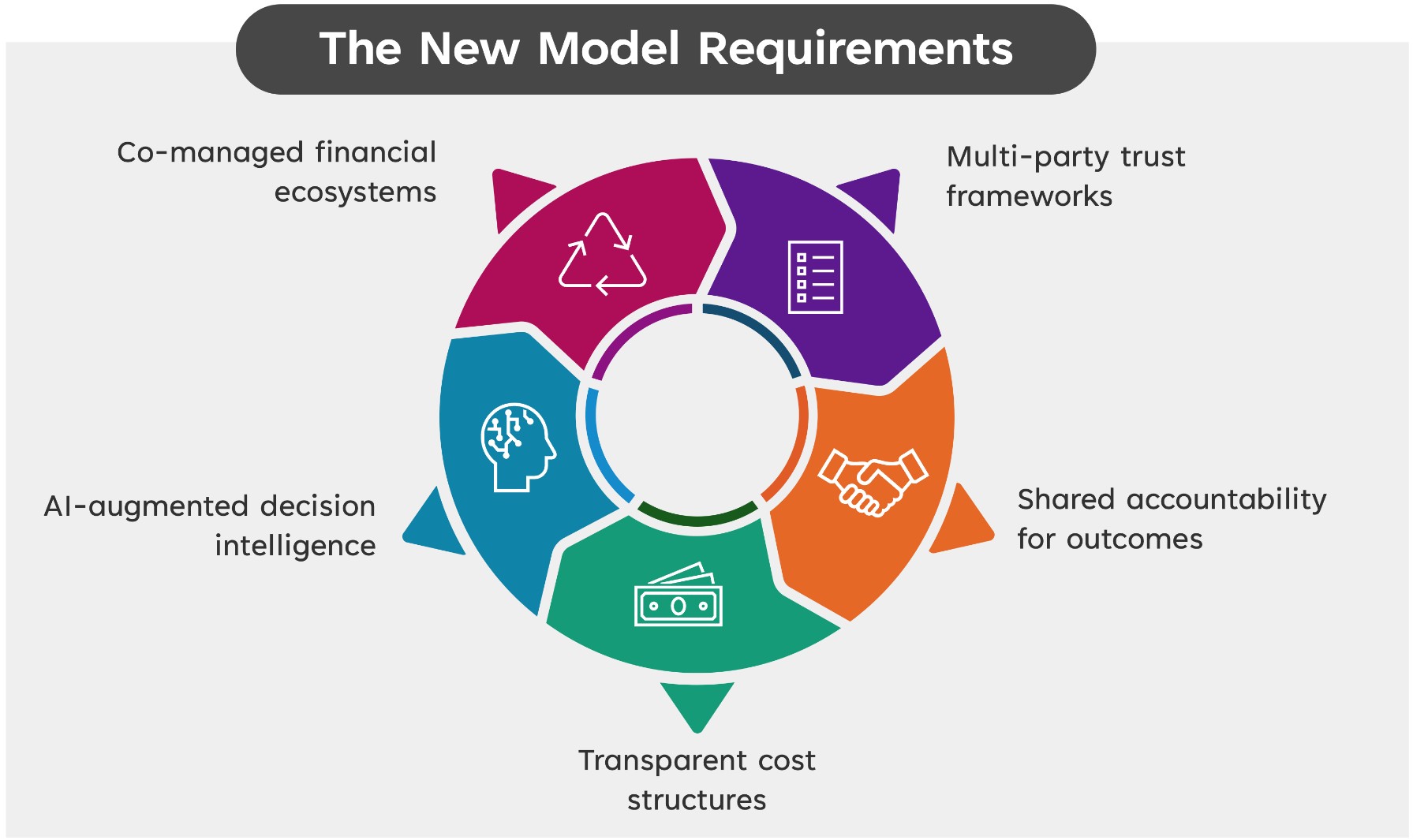
In this next era, contracts evolve into living economic frameworks, supported by joint analytics, agentic AI, and transparent cost structures, that flex with market conditions and population needs. Employers gain predictability, providers gain stability, payers gain affordability control, and patients benefit from uninterrupted, high‑quality access.

This shift is a transformation of how the industry organizes itself financially. Organizations that embrace co‑managed economics will be better equipped to navigate volatility, meet regulatory demands, and deliver sustainable value across the ecosystem. This is the blueprint for long‑term economic durability that strengthens market performance not for any single entity, but for the health system as a whole.

About the Authors

Surendar Vijayakumar
Principal Consultant, Healthcare Consulting, Wipro

Surendar Vijayakumar is a seasoned Principal Consultant in Wipro’s Healthcare Consulting Practice. He has a strong focus on solution consulting and market research analysis, primarily within the dynamic landscape of U.S. healthcare. His dedication to this domain has enabled him to develop comprehensive insights and expertise that drive impactful solutions and strategies. Surendar holds a Certified Fellowship in Healthcare Management and is based in Chennai, India.

Philip Handal
Senior Partner, Healthcare Consulting Leader

Phil has over 20 years of experience in healthcare technology consulting and care delivery. He is a leader in Wipro’s Payor Strategic Consulting services, focusing on transforming technology to deliver value for the future of healthcare delivery. He has worked extensively with payors, providers, and life sciences organizations to develop strategic initiatives, implement technology, and execute data-driven digital solutions.