




Executive Summary
Artificial intelligence (AI) adoption is skyrocketing. According to McKinsey research, 65% of global organizations now report regular use of generative AI, nearly double last year’s figure. However, many organizations face a productivity paradox: algorithms boost output while human workflows, cultures, and skills remain stubbornly analog. This white paper argues that sustainable value from AI emerges only when technological transformation is paired with people-centric Ways of Working (WoW).
This research-backed framework, maturity model, and action roadmap assist leaders in redesigning roles, rituals, and governance so that humans and machines can thrive together.
The Productivity Paradox
- Automation outpaces adaptation. Organizations deploying gen AI report quick task completion, yet uneven workforce engagement; studies show that productivity gains can coexist with declining motivation if redesign lags behind.
For example, consider the complexity of a retail ecosystem attempting to implement AI-enabled processes in HR-each week of staffing delays costs a store significant lost sales. - Workforce exposure is expanding. In the next five years, gen-AI will reshape up to 50 million jobs, altering the value of expertise.
Are you still considering a role description based on a human candidate’s skills, or are you defining roles and blended human-AI agent teams based on outcomes? - Adoption without redesign carries a risk of recessionary drag. Leaders like Klarna’s CEO are warning that unchecked white-collar displacement could result in economic contractions.
What do you envision the talent structure of your organization will look like in five years?
Why ‘Ways of Working’ Matter
WoW describes the shared behaviors, processes, and enabling structures that govern how value is created every day. When AI enters the workflow, four friction points emerge:
- Mindset mismatch - Fear of obsolescence versus augmentation.
- Skill gaps - Data fluency and prompt engineering are significant.
- Process rigidity - Linear handoffs frustrate agile, AI-infused cycles.
- Governance ambiguity - Unclear ownership of ethics, data quality, and outcomes.
We need to change our mindset as an organization. We no longer live in the same world as last year. Organizations will need to strategically redefine their rules of engagement with technology and strive to create a resilient operating model that can keep up with ever-changing technology trends.
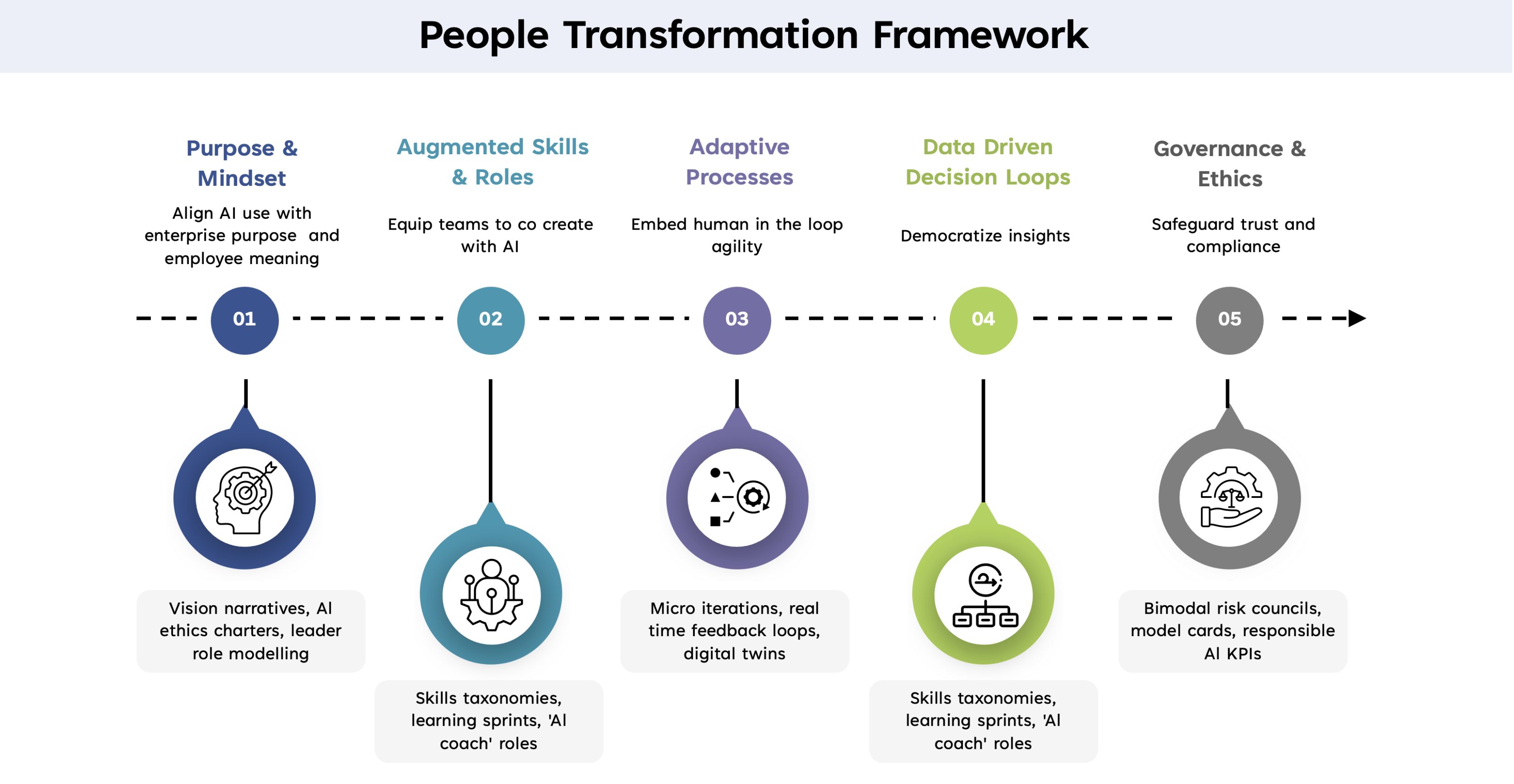
Digital tools alone rarely produce digital outcomes. Sustainable value arises when technology, talent, and teamwork move in unison. Our People Transformation Framework outlines five mutually reinforcing pillars that transform AI curiosity into enterprise-wide capability: