
The enterprise digital transformation landscape is undergoing a seismic shift, propelled by the rapid evolution of AI. Organizations are moving beyond the foundational stages of AI and even the early successes of Generative AI. The next frontier, Agentic AI, is not merely an incremental improvement but a transformative paradigm that is redefining how businesses operate, create value, and measure success.

This article challenges the conventional metrics in the face of rapid AI evolution. As enterprises move from rule-based automation to GenAI and now Agentic AI, traditional KPIs  dependant on human effort and efficiency: metrics related to service desk performance, infrastructure health and project delivery (MTTR, CSAT, Uptime / Downtime, Latency, Leads generations etc) are falling short. The future demands outcome-driven metrics that reflect strategic agility, innovation, and autonomous value creation. Rather than focusing solely on cost savings, enterprises must unlock entirely new avenues for value creation. Business leaders must recognize that Agentic AI will redefine how performance is going to be measured and optimized, demanding a radical reimagining of business models and competitive strategies to fully realize its transformative ROI.

Unlocking ROI with Agentic AI – the Shift

Enterprise Agentic AI has moved beyond isolated proofs of concept to strategic, platform-driven adoption. Organizations are now architecting multimodal AI systems that unify vision, language, and data, thus enabling scalable transformation across functions. This shift is not just technological; it’s a strategic imperative for long-term differentiation and sustainable value creation.

The principle "Your Data, Your Model, Your IP" emphasizes the need for businesses to fully own their AI value chain, treating data as a strategic asset, custom models as competitive differentiators, and IP as the foundation for long-term advantage. Agentic AI is poised to accelerate this transformation significantly by enabling autonomous systems that minimize human bottlenecks and unlock unprecedented levels of operational efficiency.

For example, Agentic AI will revolutionize customer engagement by enabling hyper-precise segmentation through deep data analysis. This will empower highly targeted marketing, boost customer satisfaction, and increase loyalty, marking a shift from basic automation to autonomous, outcome-driven systems that accelerate and expand ROI.
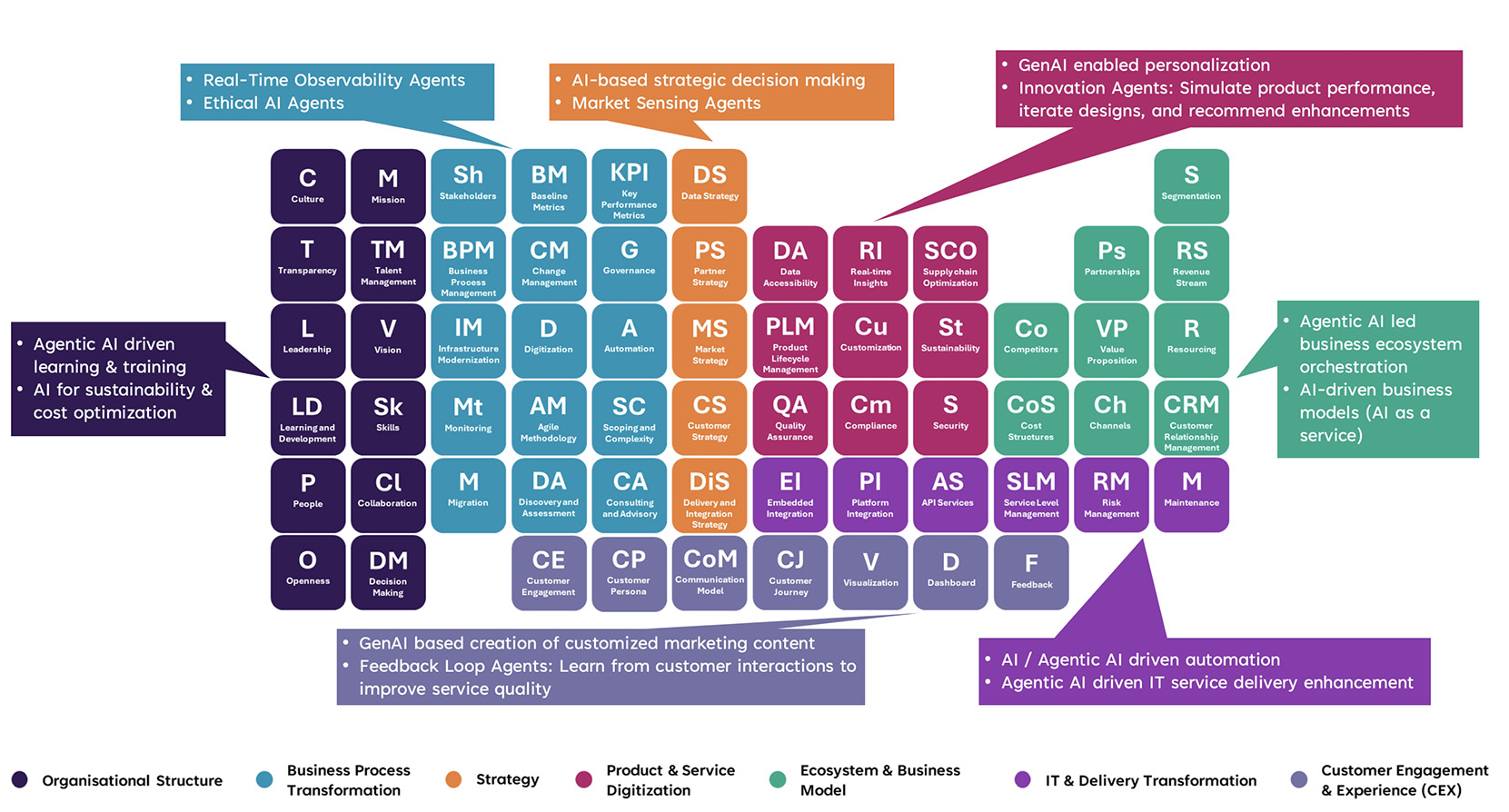
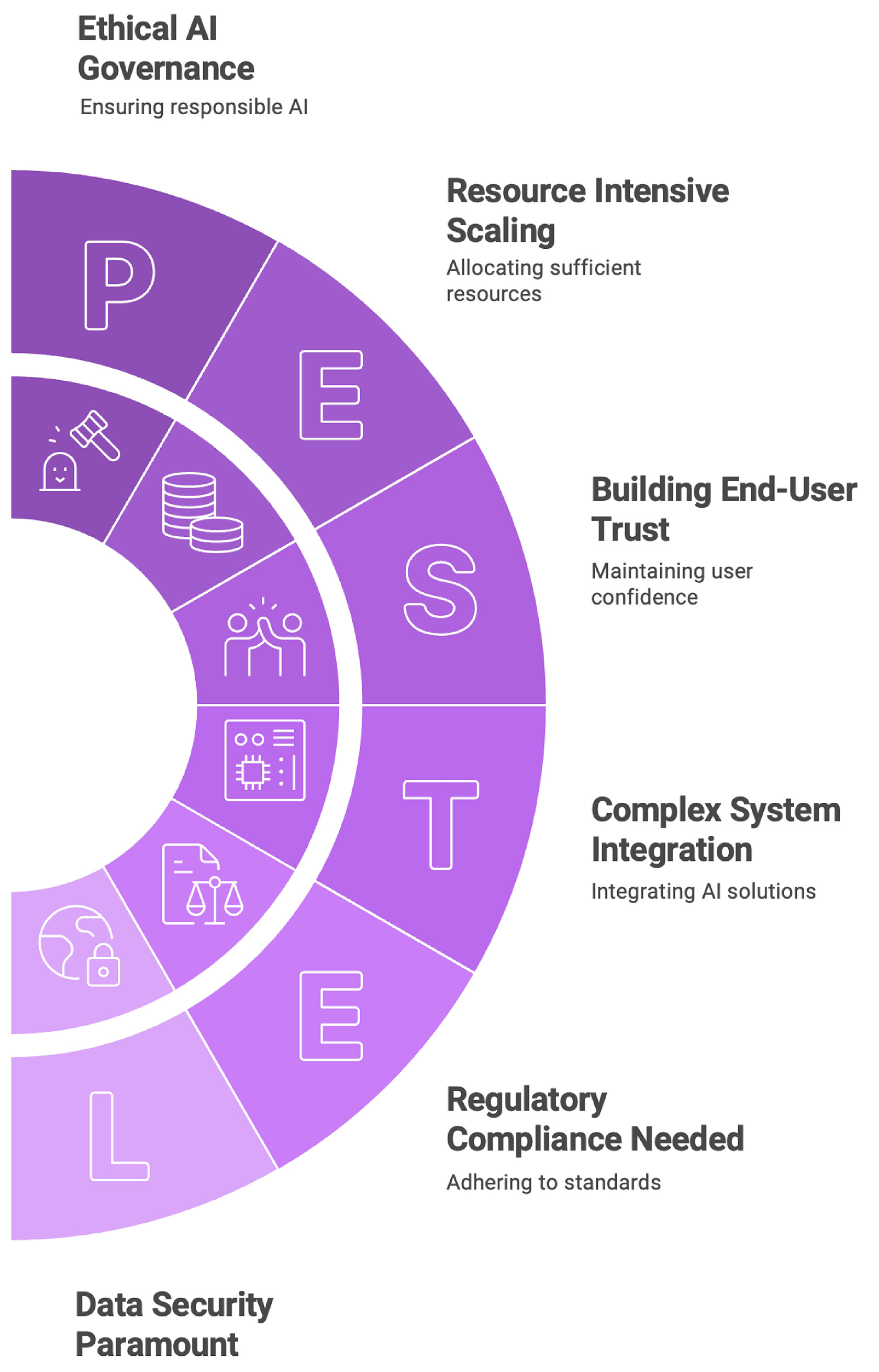
Fig 1: Periodic table framework of digital transformation (with AI/GenAI/Agentic AI infused activities added to each relevant category) 

Agentic AI redefines KPIs by transforming them into dynamic, evolving feedback loops.  Traditional KPIs have long served as reliable benchmarks for tracking human-led performance and operational efficiency. However, as enterprises adopt Agentic AI, the nature of work itself evolves, requiring KPIs that are not just tracked but fundamentally reimagined. Agentic AI enables metrics to become dynamic feedback loops, continuously learning and adapting to context. This shift complements traditional KPIs by introducing outcome-driven, real-time indicators that align with autonomous decision-making and strategic agility. Autonomous agents assess performance using AI-specific metrics like accuracy, bias, and operational impact, ensuring ethical, transparent, and personalized outcomes. KPIs must now reflect not just business results, but also user trust and experience.

Evolving KPIs for Agentic AI Transformation

Agentic AI demands a fundamental rethinking of traditional KPIs for AI transformations as it often focuses on efficiency and accuracy of the AI model itself (model performance metrics like precision, recall), alongside broader business outcomes like cost savings and revenue growth. However, with the rise of Agentic AI, these traditional metrics are becoming less relevant, as AI optimizes for outcomes rather than just effort. Organizations must shift from measuring outputs to focusing on outcomes, such as customer satisfaction and revenue growth, which AI can more effectively optimize.

New KPIs are needed to assess AI effectiveness, including accuracy and bias, to ensure responsible deployment. The real-time capabilities of AI necessitate real-time KPI monitoring for agile decision-making. Crucially, ethical considerations like fairness and transparency must be integrated into our metrics, for example, bias detection in hiring agents, transparent audit trails, Compliance dashboards etc. Finally, KPIs should reflect AI's impact on customer experience, loyalty, and the acceleration of innovation and creativity within the organization. This evolution is vital for truly capturing the ROI of Agentic AI.

 Implementing AI Transformation – the Challenges

Fig 2: AI transformation challenges

Adopting AI at scale demands strategic execution, where enterprises must navigate fragmented data, legacy integration, and compliance complexity while ensuring ethical governance and model security. Agentic AI will introduce autonomous systems that shift KPIs from lagging metrics to predictive indicators of real-world impact. Trust, transparency, and reliability must be architected into the hybrid / multi-cloud infrastructure to unlock scalable, responsible AI deployment and transformation. As AI becomes deeply embedded in enterprise infrastructure, the challenge will then shift from deployment to dynamic orchestration across hybrid and multi-cloud ecosystems. Future-ready organizations must architect for ethical governance, seamless integration, and resilient data security, where trust and compliance are built into the infrastructure by design.


Overcoming Transformation Challenges

Scaling AI across hybrid environments—from cloud to edge to on-premises—requires architectural agility and operational resilience. Enterprises must invest in platforms that support seamless integration and scalability.

Recent market studies reveal a significant shift among business leaders towards adopting service-based AI solutions. This trend highlights a growing preference for a platform-based approach, promoting early adoption and plug-and-play as the new norm. Leaders are recognizing the strategic advantages of integrating AI services that offer control, choice, and flexibility.. The underlying principle, “Your Data, Your Model, Your IP,” reflects a strategic shift where AI not only enhances operational efficiency but also empowers businesses to harness AI-driven insights for competitive advantage, fostering innovation and agility in an increasingly dynamic market landscape

A platform-based, multi-modal approach – integrating diverse data types such as text, images, audio, and video – represents a transformative change with the potential to impact various sectors. It will enable enterprises to deploy intelligent agents that understand context more deeply, automate complex tasks, and deliver personalized, adaptive outcomes across sectors like customer service, healthcare, education, and operations. By embedding this capability into a low-code/no-code platform, enterprises empower both technical and non-technical teams to build, customize, and scale intelligent agents, without needing to stitch together disparate tools or data pipelines. This not only accelerates innovation but also ensures data ownership, model control, and IP protection, aligning with the strategic principle stated above in this article: “Your Data, Your Model, Your IP.”

Strategic Recommendations

To maximize the ROI of Agentic AI, business leaders must adopt a strategic, cross-functional approach:

  • Implement unified KPIs aligned with AI capabilities and business objectives.
  • Invest in observability and ethical governance to ensure transparency and trust.
  • Empower leadership through actionable insights from AI-driven analytics.
  • Leverage platform advantages such as low-code/no-code AI agent studios to accelerate deployment and innovation.

These initiatives will not only enhance performance measurement but also position the enterprise for long-term success in an AI-first business environment. Agentic AI will demand reimagining how performance is measured. As autonomous systems take center stage, KPIs must evolve into adaptive, ethical, and user-centric metrics. The future of AI success will be measured not just in outcomes but in trust, transparency, and impact, thus ushering in a new era of intelligent accountability.

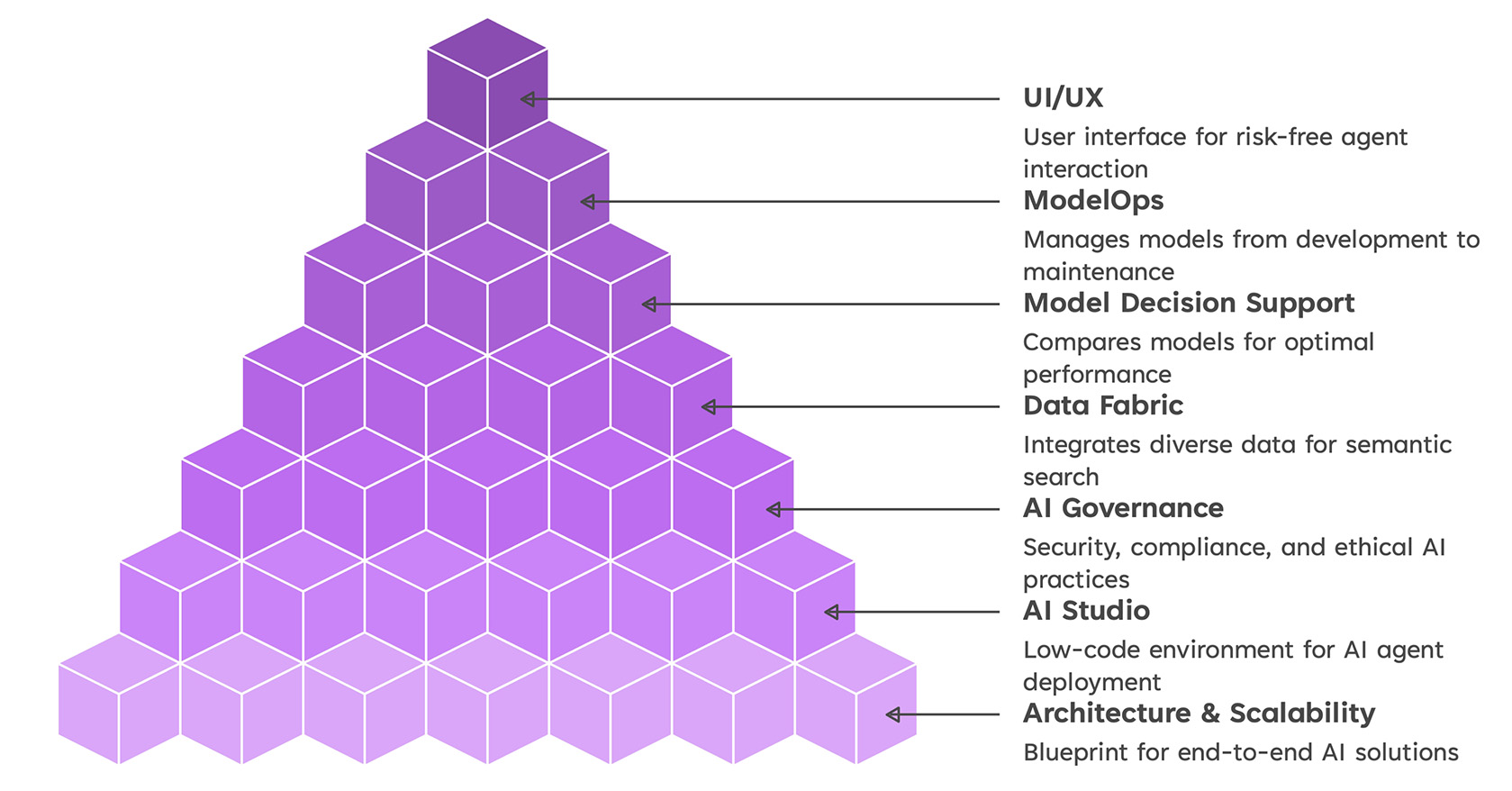
Fig 3: Grounds up – enterprise AI foundation pyramid

Conclusion

Agentic AI is reshaping the future of enterprise performance. KPIs are no longer static metrics; they’re strategic levers powered by autonomous intelligence. Enterprises that embrace Agentic AI will lead the next wave of intelligent transformation. They will measure success not by how hard their systems work, but by how effectively they deliver impact. This isn’t merely a trend; it’s the new blueprint for intelligent transformation.

About the Author

Gaurav Parakh

Global Head – Strategy, M&A, and Emerging Tech, Wipro


 Gaurav Parakh is a senior technology strategist with over 25 years of experience spanning IT consulting, solution design, sales, and advisory services. As the Global Head of Strategy, M&A, and Emerging Tech at Wipro, he partners with Fortune 500 clients and leading ecosystem players to drive large-scale digital transformation.

Gaurav specializes in go-to-market strategy, cloud transformation, generative AI, FinOps, and open-source operating models. He brings deep expertise in building and scaling innovative, AI-powered solutions that help enterprises modernize infrastructure and accelerate value creation.

He also has a background in entrepreneurship, having founded and successfully exited startups in 3D printing, education, and artificial intelligence. Gaurav holds an MBA in International Business from École des Ponts Business School (France), a BSc from the University of Bradford (UK), and a certification in Digital Transformation from the Massachusetts Institute of Technology (MIT).