


Anticipate, Assist, Resolve: Agentic AI and Proactive Member Engagement in Healthcare

Healthcare is undergoing a pivotal transformation—driven by the urgent need to elevate member engagement as a cornerstone of financial resilience, regulatory alignment, and brand credibility. Contact centers, once viewed as operational backstops, are now emerging as strategic assets that shape the member experience.

With Medicare Star Ratings placing significant weight on experience metrics, organizations must reimagine how they connect with members. Fragmented workflows and impersonal automation are no longer viable. What’s needed is not just better technology—but a bold shift in architecture that prioritizes empathy, agility, and integration.

This is a moment to lead with vision: to design systems that not only meet expectations but redefine them.

As contact centers evolve from operational support to experience orchestrators, the need for intelligent, adaptive systems becomes urgent.

Agentic AI represents a new class of autonomous technology—capable of reasoning, adapting, and acting independently across complex, regulated environments. Unlike rule-based bots or scripted IVRs, Agentic AI brings contextual intelligence, emotional acuity, and decision logic to the deeply human domain of healthcare.

The strategic case is compelling. With a projected market growth from $538.51 million in 2024 to $4.96 billion by 2030—a CAGR of 45.56%—Agentic AI is not just innovation; it’s a competitive differentiator. For payers managing Medicaid, Medicare, and ACA populations, it offers a pathway to scalable empathy, operational resilience, and experience-led compliance.

The Engagement Crisis: An Economic and Structural Fault Line

When Experience Becomes a Revenue Driver

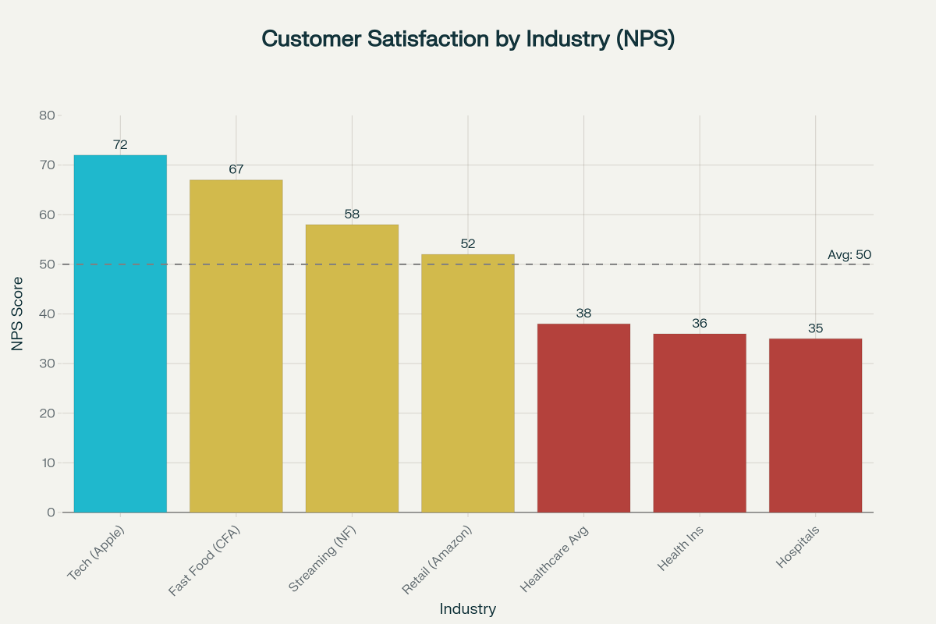
Member satisfaction is no longer a soft metric. With Medicare Star Ratings assigning 57% of their scoring to experience and complaints, poor engagement translates directly into lost Quality Bonus Payments and market erosion. Net Promoter Scores (NPS) in healthcare average around 38—far below industries like tech, where 70+ is standard. This is not just a service gap. It’s a systemic vulnerability with clear revenue implications. 
Why Legacy Contact Centers Are No Longer Enough

The traditional contact center model is structurally unsuited for the current healthcare requirements. Built on assumptions of predictability and linearity, these systems cannot manage the high-context, emotionally complex nature of member interactions.

Key limitations include:

  • Regulatory Rigidity: HIPAA, HITECH, and state-specific policies require dynamic compliance handling, which static systems can’t support.
  • Clinical Complexity: Conversations around medications, diagnoses, and procedures demand contextual understanding beyond rule-based logic.
  • Emotional Intelligence Deficit: Fear, anxiety, and confusion are common in healthcare calls—yet few systems can respond with empathy.
  • Fragmented Systems: EHRs, claims, provider portals, and CRM data live in silos, producing disjointed member experiences and lowered trust.

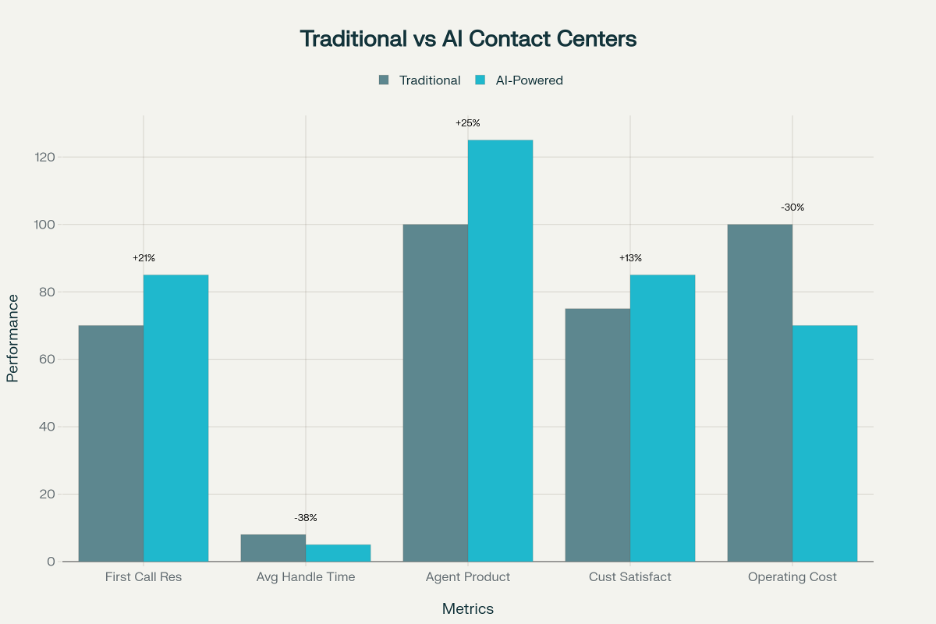
The result? Extended handle times, poor first-call resolution, and unacceptably low satisfaction scores—especially acute across vulnerable Medicaid and ACA populations.

Agentic AI: Re-Architecting the Core of Member Support

Agentic AI represents a generational leap forward. These systems are autonomous, resilient, and capable of end-to-end ownership of interactions. Inspired by neural networks, their architecture enables memory, contextual learning, and adaptability—perfectly matched to healthcare’s volatility and complexity.

Leading health plans are already shifting from prompt-driven bots to agentic customer-facing workflows that own the full lifecycle of member and provider interactions.

Rethinking the Member Journey: Touchpoints Transformed

1. Intelligent Front Doors

The era of rigid IVRs is over. With Agentic AI-powered natural language understanding, a member can simply say:

“I need to confirm if my new prescription is covered,” and be routed directly to a personalized answer—or to a virtual agent equipped to resolve the query fully.

For providers, questions like “What documentation is needed for a cardiac cath pre-approval?”

are parsed instantly and routed accurately.

Early deployments show that up to 30% of queries can be resolved at this initial stage, reducing unnecessary escalations and improving containment rates—critical for handling volume across Medicare, Medicaid, and ACA plans.

2. Precision-Based Routing

Traditional call routing matches by availability. Agentic AI routes by capability. It analyzes query type and complexity—say, a pharmacy formulary dispute or a Medicare Advantage enrollment issue—and dynamically pairs it with the agent best equipped to resolve it based on historical performance and expertise.

The result is faster resolution, fewer repeat calls, and measurably better member outcomes—critical in regulated lines of business.

3. Accent Neutralization: Clarity Without Compromise

Healthcare serves diverse populations with a broad spectrum of speech patterns, dialects, and accents. Agentic AI’s real-time accent neutralization ensures that calls are clearly understood on both ends without sacrificing the emotional tone of the speaker. This capability reduces friction, lowers repetition rates, and enhances empathy—especially in sensitive scenarios where misunderstanding can compromise care or compliance.

For government programs like Medicaid and ACA, this clarity is essential—not just operationally, but equitably.

Empowering the Agent: Dynamic AI Augmentation

Agentic AI enhances—not replaces—the human agent. Through an Agent Assist Layer, it augments every interaction in real time:

  • Full Interaction Context: Agents see a consolidated timeline of the member's prior touchpoints, sentiment trends, and unresolved issues.
  • Unified Data Pane: Pulls data from multiple systems—EHRs, claims, care plans—into one interface, eliminating screen-hopping and increasing first-call resolution.
  • Next Best Action Guidance: Provides real-time prompts based on rules, historical outcomes, and clinical guidelines.
  • Auto-Generated Documentation: Crafts compliant responses, call notes, and summaries, allowing agents to focus on the member.
  • Streamlined Wrap-Up: Reduces post-call work through automated summaries and disposition tagging.
  • Contact centers leveraging such augmentation tools see 14%+ increases in productivity, with the largest gains among newer agents navigating regulatory complexity.

Beyond the Call: Post-Interaction Intelligence

Legacy QA systems review 2–5% of calls. Agentic AI audits 100%.

Through AI-driven auditing, plans can identify systemic issues, training gaps, and compliance risks in real time. More powerfully, Sentiment AI detects emotionally charged or high-risk members—those with complex claims, repeated denials, or chronic condition stress—and flags them for proactive outreach.

This creates the foundation for a truly proactive care model, where member service isn’t reactive but anticipatory.

Fast, Frictionless Deployment: Plug-and-Play Agility

  • Unlike legacy infrastructure overhauls, Agentic AI is built for rapid deployment:
  • No Rip-and-Replace Needed: Works with existing CRMs, telephony systems, and cloud/on-prem platforms.
  • Minimal Hardware Requirements: Typically deployable with just a softphone and USB headset.
  • Fast Rollout: Core functionality can go live in under a day; enterprise-wide deployment is staged based on compliance milestones.
  • OpEx Model: Available as a “Contact Center as a Service” (CCaS), supporting modular adoption without upfront CapEx.

Ethical Guardrails: Responsible AI in a Regulated Landscape

With autonomy comes responsibility. Agentic AI must be governed through robust ethical frameworks:

  • Preventing Agent Overload: Too many AI prompts can reduce human efficiency. Systems must be tuned for clarity, not noise.
  • Maintaining Compliance Integrity: All outputs must meet HIPAA and PHI requirements—errors at scale are unacceptable.
  • Supporting Human Morale: AI must assist, not override. Keeping humans in the loop ensures empathy remains at the core of service.

As leading advisory bodies warn:

“Boards must embed AI governance into operational strategy—transparency and human oversight are non-negotiable.”

Agentic AI as the Strategic Heart of Next-Gen Healthcare Support

Agentic AI is not an overlay—it is the new infrastructure for healthcare engagement.

It addresses not just symptoms like long call times or poor routing but the systemic design flaws that have kept healthcare service reactive, transactional, and impersonal. It elevates every layer of member and provider interaction—from the first spoken word to the final post-call insight—into a strategic asset.

Health plans that embrace Agentic AI will not only resolve inquiries faster or reduce operational cost. They will fundamentally reposition their service models—toward personalized, proactive, and intelligent engagement that builds trust, drives retention, and sustains compliance at scale.

This is the strategic pivot point. The future of payer operations belongs not to the fastest adopters of automation, but to those who build systems where AI and humans operate in tandem—augmenting judgment, expanding capacity, and reengineering care experiences that are as intelligent as they are humane.

At Wipro, we are actively building and refining these capabilities as part of our AI-enabled Contact Center as a Service for healthcare payers. These offerings are specifically designed to meet the complexity of Medicare, Medicaid, and ACA operations—with modular deployment, rapid ROI, and built-in compliance.

Done right, Agentic AI transforms contact centers from cost centers into centers of trust, empathy, and strategic advantage—where every interaction delivers not just a resolution, but a better standard of care.

About the Authors

Nagaraj Bhogshetty
Nagaraj Bhogshetty leads Wipro’s PayerAI industry solution and oversees the company’s Government Healthcare business. He brings over 20 years of experience in the healthcare industry.

Shamik Das
Shamik Das leads Wipro’s Healthcare CX Practice, he has 22 years of experience in US Healthcare