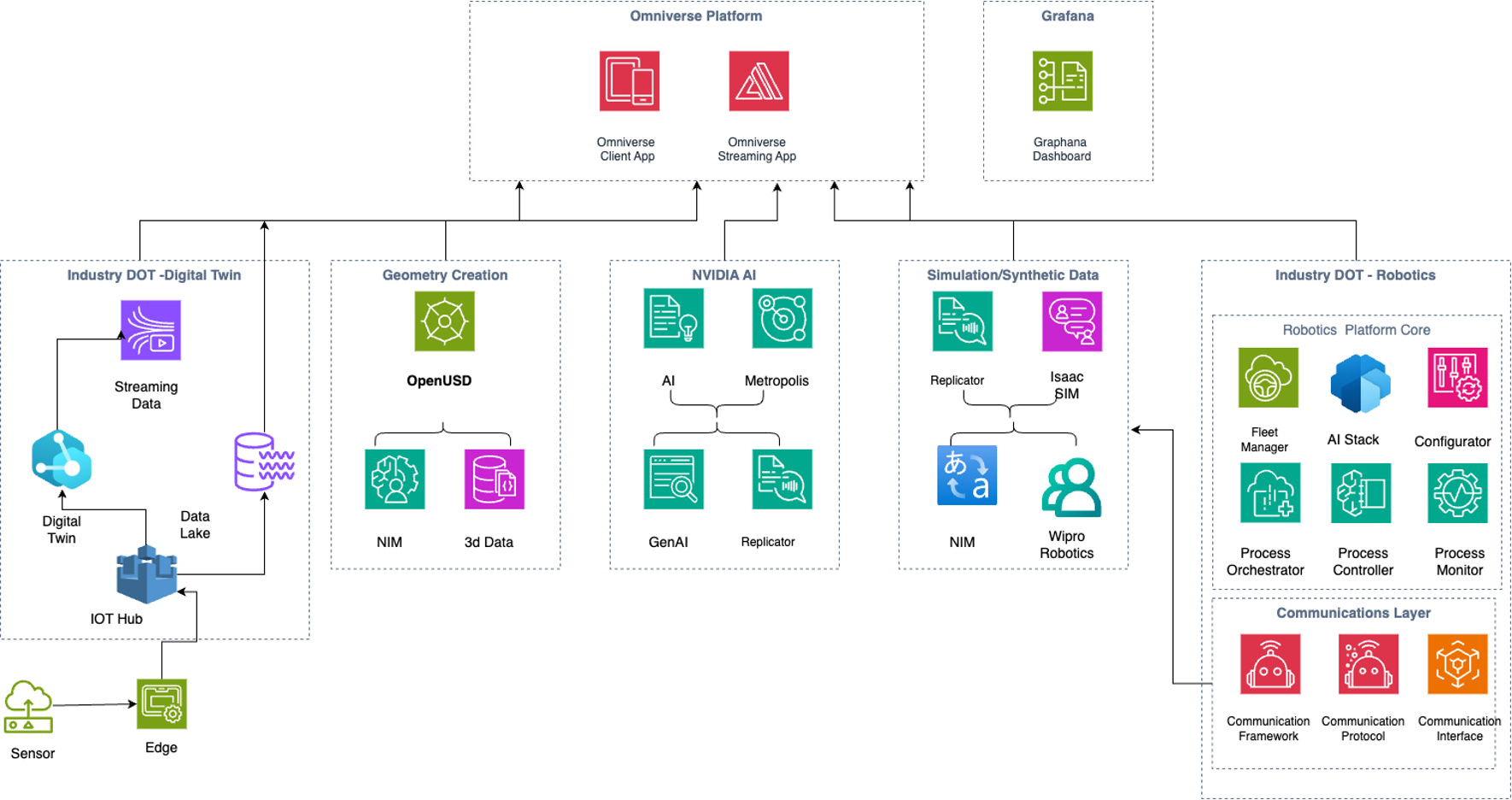


The convergence of IoT, AI, Digital Twins, and augmented reality is revolutionizing manufacturing, marked by technological advancements, evolving demands, and increasing competition. Immersive digital representations of physical assets enable manufacturers to design, build, and operate more efficiently, fostering collaboration and operational excellence. By connecting digital and physical worlds streamlines operations with AI-driven insights and real-time data, resulting in smarter, faster, and cost-efficient production. Recent advancements have transformed the industry, paving the way for innovation and excellence. Gartner's research highlights trends for 2025, including computer vision for worker safety, Zero-Trust security concepts, and GenAI in design and engineering. Enterprises face challenges in achieving efficiency, collaboration, and integration of digital and physical realms. These transformative technologies offer unprecedented opportunities for optimization, productivity, and innovation.
The Key to Manufacturing Success: Connect, Compute, Visualize
To achieve next-gen manufacturing excellence, organizations must focus on the Three Pillars of Transformation: Connect, Compute, and Visualize.
Connect: Successful transformation begins with seamless connectivity. Manufacturers can integrate diverse systems, sensors, and data sources in real-time, ensuring continuous communication across the entire supply chain. This connectivity drives smarter decision-making and maximizes operational efficiency. Real-time exchange of sensor data enhances operational insights and accelerates decision-making.
Compute: High-performance computing is at the core of next-gen manufacturing. Advanced GPUs and AI tools process vast amounts of data, allowing for real-time analysis and optimization. This computational power drives predictive maintenance and enhances process optimization. Rapid analysis of complex datasets enables data-driven decisions that reduce costs, prevent downtime, and ensure optimal performance. Autonomous systems are empowered by training and simulation of AI-driven robots and smart city infrastructure, improving safety and efficiency.
Visualize: Visualization transforms manufacturing by enabling interactive 3D models of factories, products, and systems. This real-time environment empowers teams to simulate, test, and refine designs before deployment. Visualization enables faster, informed decisions, effective collaboration, and early issue identification, improving productivity and reducing risks.
Innovative Use Cases Leading Manufacturing Transformation
Here are a few practical applications of the transformative technologies driving innovation in manufacturing:
Digital Twin & Simulation: Digital twin technology provides a virtual representation of physical assets, continuously updated with real-time data. Manufacturers use advanced simulations to test, optimize, and validate production processes before implementation. This accelerates design cycles, reduces errors, and drives innovation, ensuring agility and responsiveness to changing demands.
Robotics & Physical AI Automation: The future of manufacturing is autonomous, with robotics accelerated by Physical AI at the forefront. Integrating AI-powered vision systems and deep learning models, robots adapt to real-time changes and collaborate with humans in dynamic environments. Simulating robotic systems in lifelike environments reduces deployment risks. AI enables robots to interpret data and adapt, improving safety, productivity, and efficiency.
AI-Driven Insights: AI reshapes how manufacturers manage quality, safety, and performance. Leveraging AI-driven insights, manufacturers monitor production processes, detect anomalies, and predict failures. AI models analyze real-time data for predictive maintenance, preventing downtime and extending asset lifespan. AI detects hazards like equipment malfunctions or unsafe conditions, enabling proactive risk mitigation. These insights improve operational performance and safety in next-gen manufacturing. Design Collaboration: Collaboration is at the heart of next-gen manufacturing.
Designers, engineers, and stakeholders work together in real-time on a shared virtual platform, creating and refining product designs, digital twins, and workflows. This environment accelerates decision-making and fosters innovation by enabling teams to visualize, test, and adjust complex systems in real-time. A unified infrastructure for managing design data ensures team alignment and access to the latest information, driving faster time-to-market and better product quality. Integrating diverse tools and assets ensures smooth collaboration, reducing errors and accelerating innovation.
How Wipro and NVIDIA are Leading Manufacturing Transformation
Wipro’s Industrial Metaverse strategy creates immersive digital representations of physical assets and environments, enabling manufacturers to build, operate, and design more efficiently in a virtual world, fostering deeper collaboration and operational excellence. With Wipro's Industry DOT (Design to Operations Twin) framework, manufacturers can connect their digital and physical worlds, streamlining operations with AI-driven insights and real-time data. Paired with NVIDIA Omniverse™, a collaborative 3D simulation platform, manufacturers can create digital twins of factories and assets, simulate scenarios, and optimize workflows in a shared virtual space.