

The Shift Toward Agentic Commerce

Commerce is evolving fast, thanks to the rise of agentic AI where smart AI agents and tokenized payments combine to create more intelligent and autonomous transactions. This shift is already reshaping industries like retail, travel, healthcare, and wealth management. The agentic AI in retail and eCommerce market size reached USD 46.74 billion in 2025 and is forecast to climb to USD 175.11 billion by 2030, translating into a robust 30.2% CAGR over the period.

A few big changes are driving this transformation:

  • Increasingly complex markets, with more transactions, data, and payment channels.
  • Advanced AI agents that make real-time decisions, spot fraud, and personalize services.
  • Stricter compliance and security rules, requiring smarter, adaptable systems.

We are seeing this in action with features like Mastercard Agent Pay, Visa Intelligent Commerce and Amazon’s “Buy for Me” AI shopping agent. The move to agentic commerce isn’t just a future trend; it’s happening now, promising smarter and more personalized experiences.
New Models for Agentic Commerce

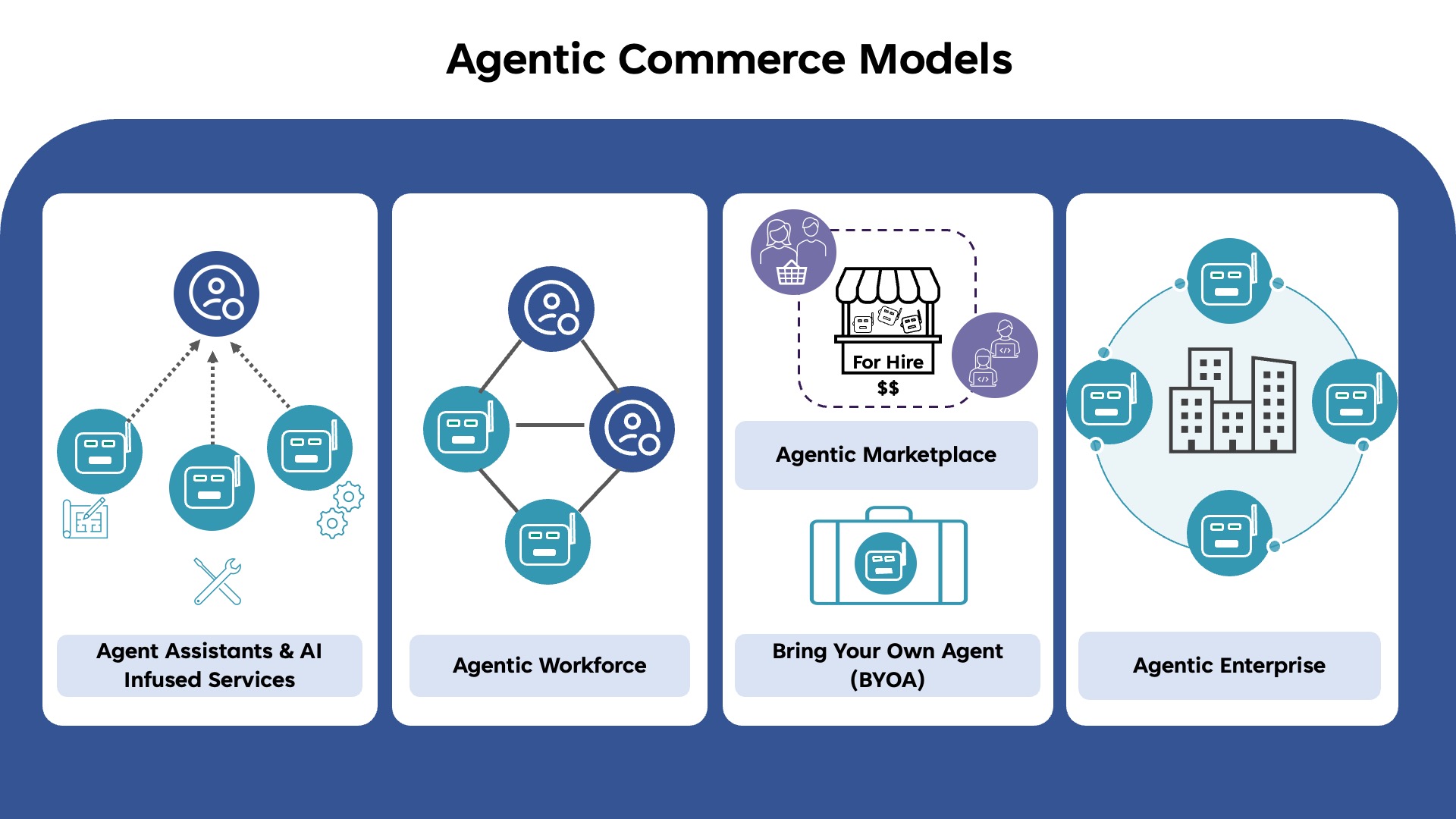
Agentic commerce is all about using AI-driven agents in payments and business workflows. Innovations like Agent Assist and Bring Your Own Agent (BYOA) are opening up new ways to personalize, streamline, and differentiate services.

Agent Assist for Consumers and Businesses

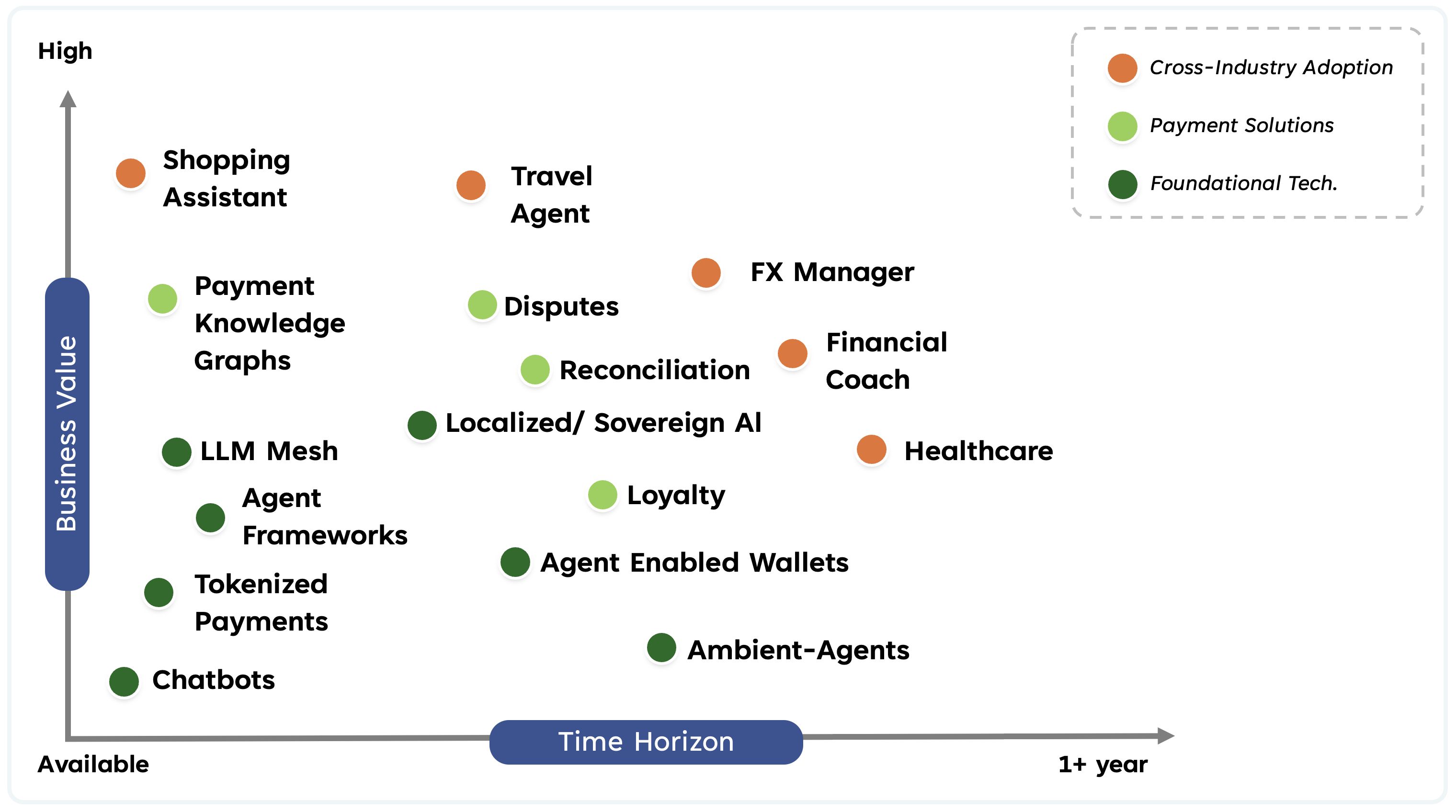
Agent Assist is quickly catching on. For consumers, AI agents for digital wallets enable secure, tokenized, near-effortless payments. These agents recommend products, hunt for the best deals, help with fraud resolution, manage subscriptions, and even provide personalized financial insights.

For businesses, agents handle everything from onboarding and training to optimizing payment fees, keeping equipment running, reconciling payments, and even managing loyalty programs. They can analyze sales data, recommend improvements, and streamline processes letting teams focus on what matters most.

AI-Infused Products & The Agentic Workforce

AI-powered products mean faster, customer-focused solutions. In the workplace, agents handle unpredictable tasks like managing transaction spikes or novel fraud cases. They support both customers (think onboarding chatbots) and internal staff (for audits or reconciliation), making businesses more agile and efficient.

Agentic Enterprise, Marketplace & BYOA

Some enterprises are starting to use complex multi-agent systems and ambient agents to take over certain processes, like token management or real-time foreign exchange. While this is still emerging, it could bring big advantages where scale, speed, and precision are critical.

In the future, everyone might have a personal AI agent like smartphones today managing personal and work tasks. Shared agents can cut costs for businesses and lighten the load on user devices. But to make this work, we will need solid operating system support, robust controls, effective certification, and agentic marketplaces/ stores for both individuals and businesses.

Laying the Groundwork for Intelligent Transactions

To make agentic commerce work, a modular, platform-based strategy is key. It starts with an Agent Readiness Assessment, sorting through use cases to find the biggest opportunities. The focus is on integrating Large Language Models and Agent Frameworks, followed by quick prototyping and using pre-built tools to speed up adoption.

Agentic Ecosystem for Value Creation

Strong governance and certification are essential to ensure agents remain secure and compliant. With ongoing monitoring and optimization, businesses can keep improving reliability and outcomes. Incremental value creation stems from an ecosystem of agents skilled in payment LLMs, technology, and processes collaborating to deliver industry-specific solutions across banking, retail, travel, and insurance domains.

Aligning AI Agents With Business Goals

For real impact, agent strategies should focus on cutting costs, boosting customer experience, and driving growth. Scalable frameworks will help industries adopt agents more easily, putting early adopters ahead in Agentic Commerce.

An illustrative example is the collaboration between Wipro, SIAM.AI, and NVIDIA, who developed ‘Sukjai’ for the Tourism Authority of Thailand. This virtual assistant delivers personalized, current travel information and supports the management of increasing tourist volumes. 

The Agentic Future Starts Now

Agentic Commerce is changing the game in digital payments and business transformation. Companies embracing these models today will benefit from greater efficiency, better customer engagement, and more innovation. To stay ahead, it’s crucial to align agents with your core business, invest in flexible frameworks, and build strong governance. The future of Agentic Commerce isn’t just coming it’s here, and it’s a strategic must for digital leaders.

About the Author

James Curzon
Global Head of BFSI Consulting 

James Curzon brings over 25 years of consulting experience within Financial Services. He joined Wipro from Grant Thornton, where he served as the Managing Partner and Head of Banking for Europe. Over the past quarter-century, he has worked with most Global Tier 1 Banks and a significant portion of Tier 2 and 3 Banks. His previous roles include partnerships at Capco, Chaucer Group (BIP), IBE, and Ernst and Young, all within the Banking and Financial Services remit.