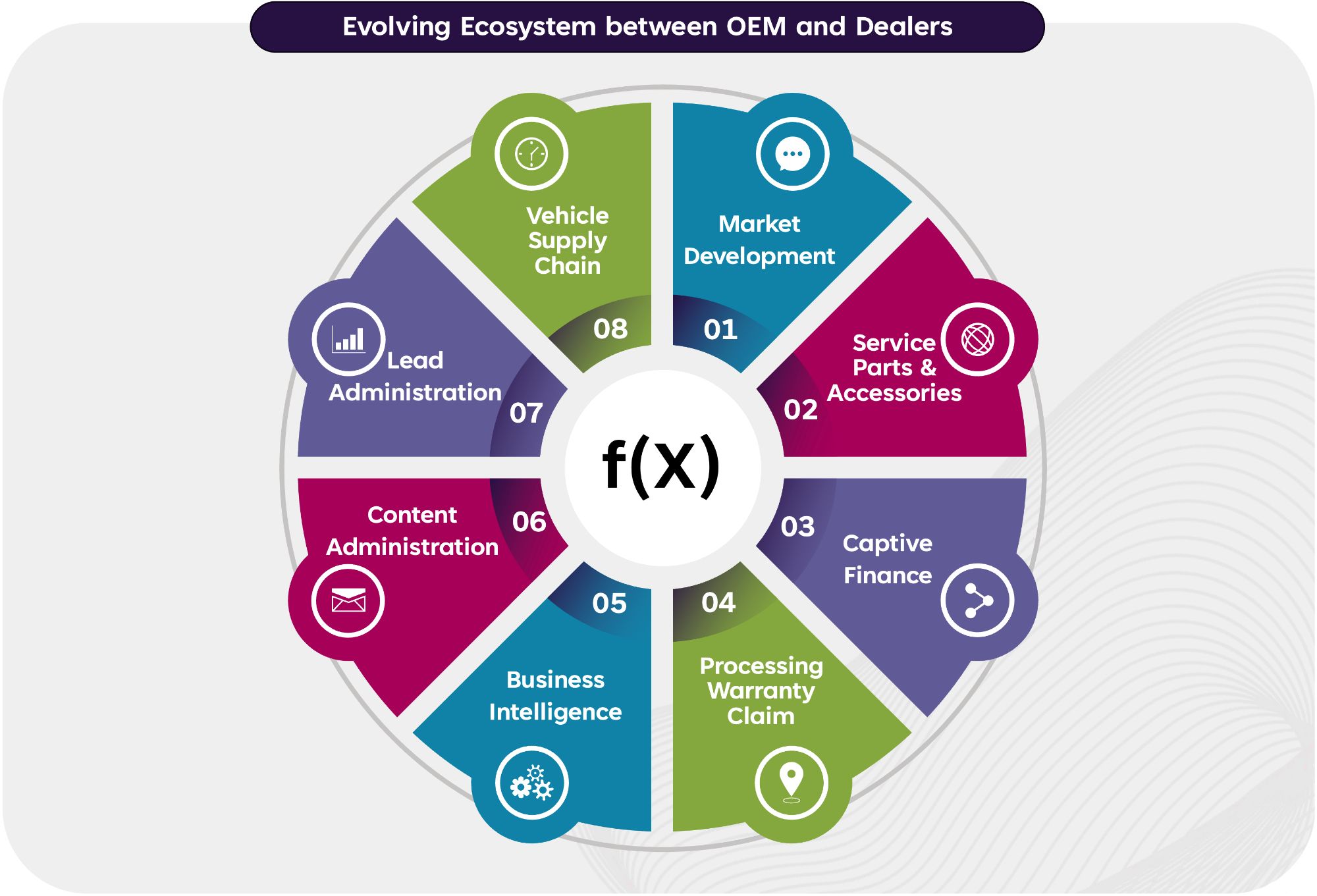
The DCP (Dealer Communication Portal) is no longer a back-office tool; it’s the digital control tower of the OEM–dealer relationship. Yet today, it remains fragmented, unintuitive, and technologically outdated. What should be a seamless, intelligent platform has become a source of frustration, reducing productivity, eroding trust, and limiting agility.

As the automotive industry faces slowing EV adoption, tighter margins, and rising customer expectations for digital retail, OEMs are shifting toward direct-to-consumer models and data-driven journeys. To deliver a consistent, connected experience, the ecosystem requires real-time insights, streamlined processes, and transparent communication.

The DCP must evolve into a smart, integrated platform—empowering dealers with real-time intelligence, seamless integration, and personalized experiences. This transformation turns a system of necessity into a growth engine, aligning with OEM digital ambitions and strengthening dealer relationships across the network.

Why Modernization Can’t Wait

In an era where speed, personalization, and data access define competitive advantage, most Dealer Communication Portals have fallen short of being the strategic interface they were meant to be. Today, they suffer from several critical shortcomings:

1. Outdated Technology

Legacy, monolithic systems with poor integrations cause frequent disruptions, slow workflows, and erode dealer trust. OEMs face high maintenance costs, limited scalability, and repeated modernization failures.

2. Operational Inefficiency

Lack of unified access and single sign-on forces users to juggle multiple systems, slowing responses and driving offline workarounds. OEMs suffer from inconsistent processes and reduced productivity.

3. Poor User Experience

Cluttered screens, confusing menus, and weak mobile optimization lead to low adoption and longer task times. OEMs face resistance from dealers, higher training costs, and uneven execution.

4. Lack of Personalization

No role-based personalization or guided workflows leaves priorities unclear, causing missed tasks and compliance gaps.

5. Limited Insights

Weak search capabilities, minimal analytics, and the absence of real-time dashboards hinder informed decision-making. Dealers face delays accessing key data; OEMs lose visibility and agility.

Dealers see the portal as a necessary hurdle—something they use because they must, not because it creates value. The challenges run deep and structural; cosmetic tweaks or content reshuffles won’t fix them.


The Strategic Imperative for OEMs

For OEMs, delaying modernization comes at a steep cost: disengaged dealers and eroding loyalty, operational inefficiencies that inflate expenses and slow time-to-market, and missed revenue from poor integration with digital retail and service ecosystems. Without real-time data, strategic blind spots persist, crippling insights into dealer performance and customer behavior. Meanwhile, competitors with modern portals deliver superior experiences, while legacy architectures hinder innovation—blocking the adoption of AI, automation, and predictive analytics.

Several industry trends are reshaping the automotive landscape.

1. Digital Retail & Omnichannel Journeys – Customers move seamlessly between online platforms and physical showrooms, so OEMs need unified data and workflow orchestration.

2. Margin Pressure & Network Variability – Operational inconsistencies impact brand reputation and profitability, making standardized execution and visibility essential.

3. Changing Dealer Engagement Expectations – Dealers expect modern, mobile-first digital tools, compelling OEMs to deliver intuitive, role-based, high-performing platforms.

4. Product Mix (ICE, Hybrid, & EV) – Dealers face new service workflows, training needs, and complexity in parts and diagnostics, requiring OEMs to provide real-time knowledge and process guidance.

Future Vision: The Next-Gen Dealer Portal

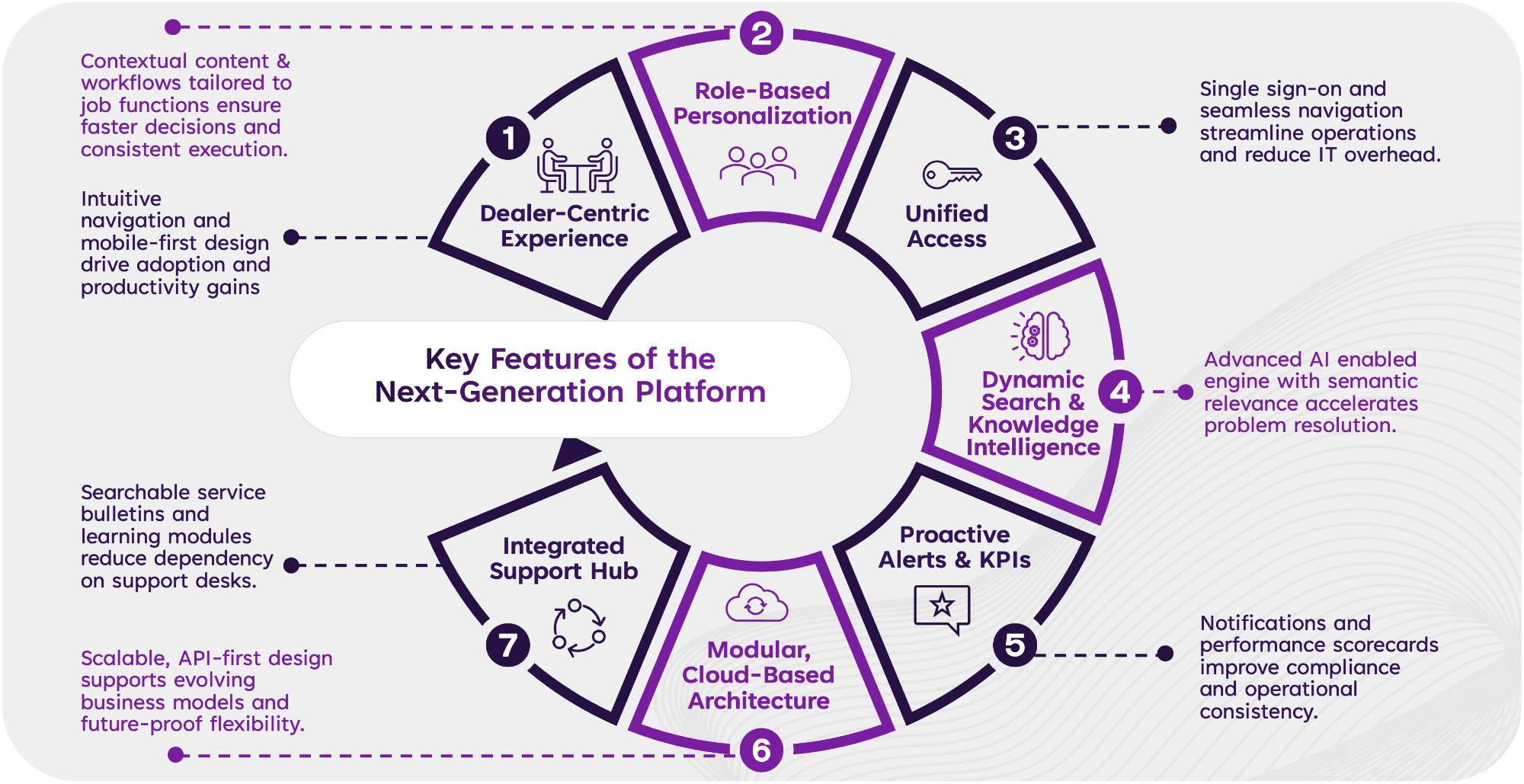
Future dealer success will hinge on speed, simplicity, and intelligence. The Dealer Communication Portal must transform from a static content repository into a centralized digital command center for dealership operations—a platform that guides work, standardizes execution, and enforces accountability. This evolution turns the portal into the system of execution, seamlessly integrating applications, processes, data, and performance management into a unified operating environment.

Strategic Enablers: What Will Drive Transformation?

To drive the next wave of dealer transformation, three strategic enablers will play a critical role:

1. Interconnected Value Chain

The automotive ecosystem operates as a tightly interdependent value chain, where upstream decisions impact dealer operations. Production planning, supply chain constraints, parts distribution, and vehicle logistics timelines immediately influence what dealers can sell, how they service vehicles, and the promises they make to customers.

2. Data & Automation

The shift to a modular, cloud-based architecture is critical for enabling an integrated data platform. This unified environment will serve as the foundation for the Control Tower, delivering real-time visibility and intelligence to manage the complexities of the value chain.

3. Alignment with Dealer Needs

Understanding the rapidly changing automotive landscape—driven by technological advancements and shifting consumer behaviors—is essential. The platform must not only address current needs but also remain adaptable and forward-thinking to stay relevant over the next decade.

OEMs must ensure the dealer communication platform facilitates core operations smoothly and seamlessly, becoming the foundation for consistent, brand-aligned execution across the dealer ecosystem.

The Payoff for OEMs and Dealers

For OEMs and dealers, these outcomes are game changers that redefine efficiency, responsiveness, and long-term growth.

1. Operational Discipline – Tasks executed consistently across all dealerships lead to higher throughput and stronger compliance.

2. Speed & Responsiveness – Faster access to information, actions, and insights improves customer experience and accelerates market response.

3. Execution Transparency – Clear visibility into dealer performance down to task-level completion enables targeted support and performance coaching.

4. Future-Ready Scalability – A platform ready for new CASE, EV, and digital retail workflows protects technology investments and accelerates transformation.

Next Steps: Co-Creating the Future Portal

Transforming the Dealer Communication Portal is not only a technology program — it is a network-wide operating model shift. Success requires bringing dealers into the journey early, ensuring they feel heard, supported, and empowered, rather than “changed upon.

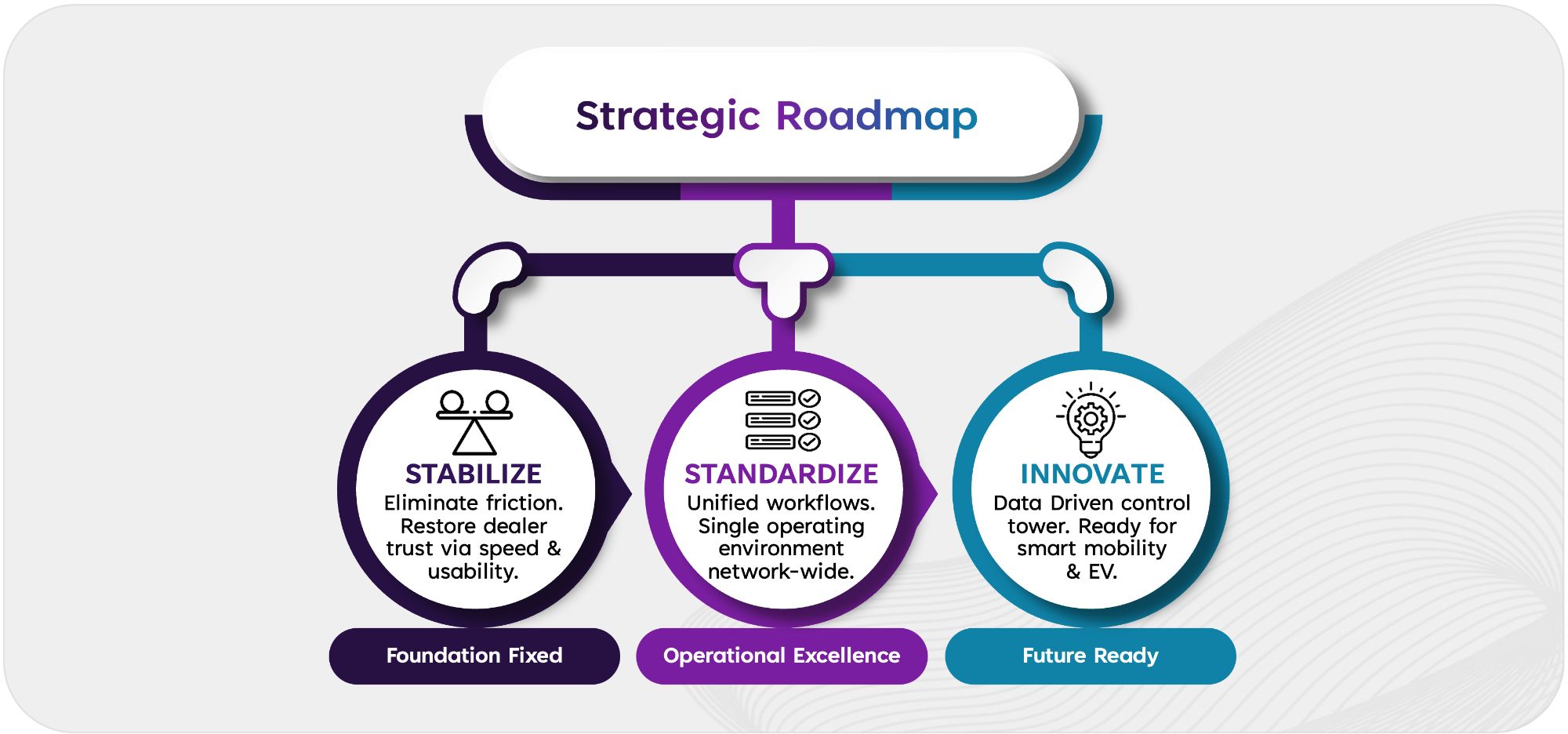
The high-level roadmap above balances strategic ambition with practical, phased delivery, minimizing disruption while building momentum and adoption.

Success depends on dealer collaboration, iterative delivery, and outcome-focused communication.

1. Co-Create, Don’t Dictate – Design with dealer input for real-world workflows and stronger adoption.

2. Start with High-Impact Journeys – Focus on daily-use workflows to cut complexity and deliver quick wins.

3. Design for Speed & Simplicity – Every click should earn its keep, saving time that drives revenue.

4. Iterate, Don’t “Big Bang” – Quarterly releases reduce risk and show steady progress.

5. Sell Outcomes, Not Features – Align on shared goals like CX, profitability, and efficiency to build trust.

Turning the Portal into a Growth Engine

Transforming the Dealer Communication Platform into a modern, intuitive, and efficient solution will elevate dealer operations and satisfaction, creating long-term value for OEMs and their networks. Wipro provides industry-aligned strategies, dealer workflow expertise, and scalable platform delivery, covering automotive retail and aftersales, experience design frameworks, digital accelerators, technology partnerships, and global transformation support.

By resolving current pain points and introducing forward-thinking features, the platform can meet today’s automotive demands and remain agile for future trends. This strategic vision forms the foundation for a comprehensive transformation roadmap, positioning the platform as the center of dealer productivity, the control surface for network performance, and the cornerstone for future business models.

About the Authors

Manik Singhal
Managing Consultant, Wipro Consulting

Ritesh Kulkarni
Senior Partner, Automotive - Wipro Consulting